In this Mentee Showcase, get to know Owen Chou, an aspiring 3D Environment Artist.
Owen shares his background as an animator, how he got into video game art, why he chose a Vessel Forge Mentorship, and a full breakdown of his project “Rothenburg Christmas”.
Q: What is your area of focus? And which Vessel Forge program did you enroll in?
I enrolled in the Foliage Art Mentorship with Jared Sobotta. I started my career as a 3D animator before transitioning into 3D game art, where my true passion lies. I am currently seeking opportunities as a 3D Environment Artist for games, which is my goal.
Q: What led you to pursue a career in video game art?
I originally went to university to study animation with the goal of pursuing a career as a 3D animator in the film industry. During my studies, I had the opportunity to take a few 3D modeling classes, and instantly fell in love with the process—I found it far more enjoyable than animation.
Ironically, I didn’t perform particularly well in my 3D modeling classes. I still remember receiving a B- as my final grade, and I convinced myself that maybe it just wasn’t meant for me. Since animation was the area I was stronger in, I decided to stick with that path instead.
After graduating, I landed my first job as a 3D animator and decided to give it a shot, even though I have always been more passionate about 3D game art. After just a few months, I realized I couldn’t see myself doing animation for a living because the passion simply wasn’t there. So, I decided to leave animation behind and fully commit to what I truly wanted to pursue. After looking around a couple of schools, I enrolled in a one-year program at Think Tank Training Centre, where I focused on Environment & Prop Art for Games, and it became one of the best decisions I’ve ever made.
Q: What do you enjoy about creating art for video games?
I’ve always loved creating art as a form of visual storytelling. I’ve been drawn to visual media like films and video games because they immerse you in their worlds and make you feel as though you’re experiencing the protagonist’s journey.
Q: What were some of your biggest takeaways from your Vessel Forge program?
I came into this mentorship with a solid background in environment art, so I chose to enrol in a specific area I’m not comfortable with, which in this case is foliage creation. I had such a wonderful experience with my mentorship, and I am amazed by how much I learned and improved in such a short period of time. It challenged me to tackle areas that are not necessarily in my comfort zone and to overcome those fears.
My biggest takeaway from the mentorship was gaining insight into Jared’s foliage creation workflow. Before joining, most of the foliage tutorials and resources I found online only covered the basics and didn’t meet the level of quality I was aiming for. It felt like creating truly high-quality foliage was a whole new subject that I needed guidance on.
Seeing how Jared approached a wide variety of foliage types completely changed that. He broke down his process into clear, digestible steps, making even complex techniques easy to understand and apply. As a result, I was able to create foliage that reached the quality standard I had been striving for and was confident enough to include in my portfolio.
Q: Do you think you will use what you learned in your mentorship going forward in your career?
Absolutely! Before the mentorship, I always avoided creating environments with organic elements like foliage because I didn’t feel confident that I could do them justice. Even though I had always wanted to build those kinds of environments, I steered away from them because they felt outside my comfort zone.
Now, after everything I learned from Jared, I finally have the confidence to take on organic environments. I have a much stronger understanding of the workflow and process, and what once felt intimidating now feels far more achievable. This mentorship has opened up an entirely new direction for the types of environments I want to create in the future, whether for professional or personal work.
Q: Why did you decide to apply for a Vessel Forge mentorship?
What initially caught my attention about Vessel Forge was the incredible lineup of mentors. They are all artists whose work I admire, and each one specializes in a specific area of environment art. I really appreciate that many of the mentorships focus on a particular skill set, whether it’s foliage, materials, sculpting, lighting, or other disciplines.
As environment artists, we have to wear many hats and develop a broad range of skills. While everyone has areas they’re confident in, there are always other areas that feel more challenging. I saw Vessel Forge as the perfect opportunity to strengthen those weaker areas instead of continuing to avoid them. That’s exactly why Jared’s mentorship was such a great fit for me. I had been struggling with foliage creation on my own and knew I needed guidance from someone with deep expertise. At the same time, I knew I could also ask him questions about environment art as a whole. Jared isn’t just a great foliage artist; he’s also a fantastic environment artist, and learning from someone with that level of experience was incredibly valuable.
Q: Where can people find your art?
ArtStation: http://artstation.com/owenchou3d
LinkedIn: http://linkedin.com/in/owenchou11/
Instagram: instagram.com/owenchou3d

Rothenburg Christmas
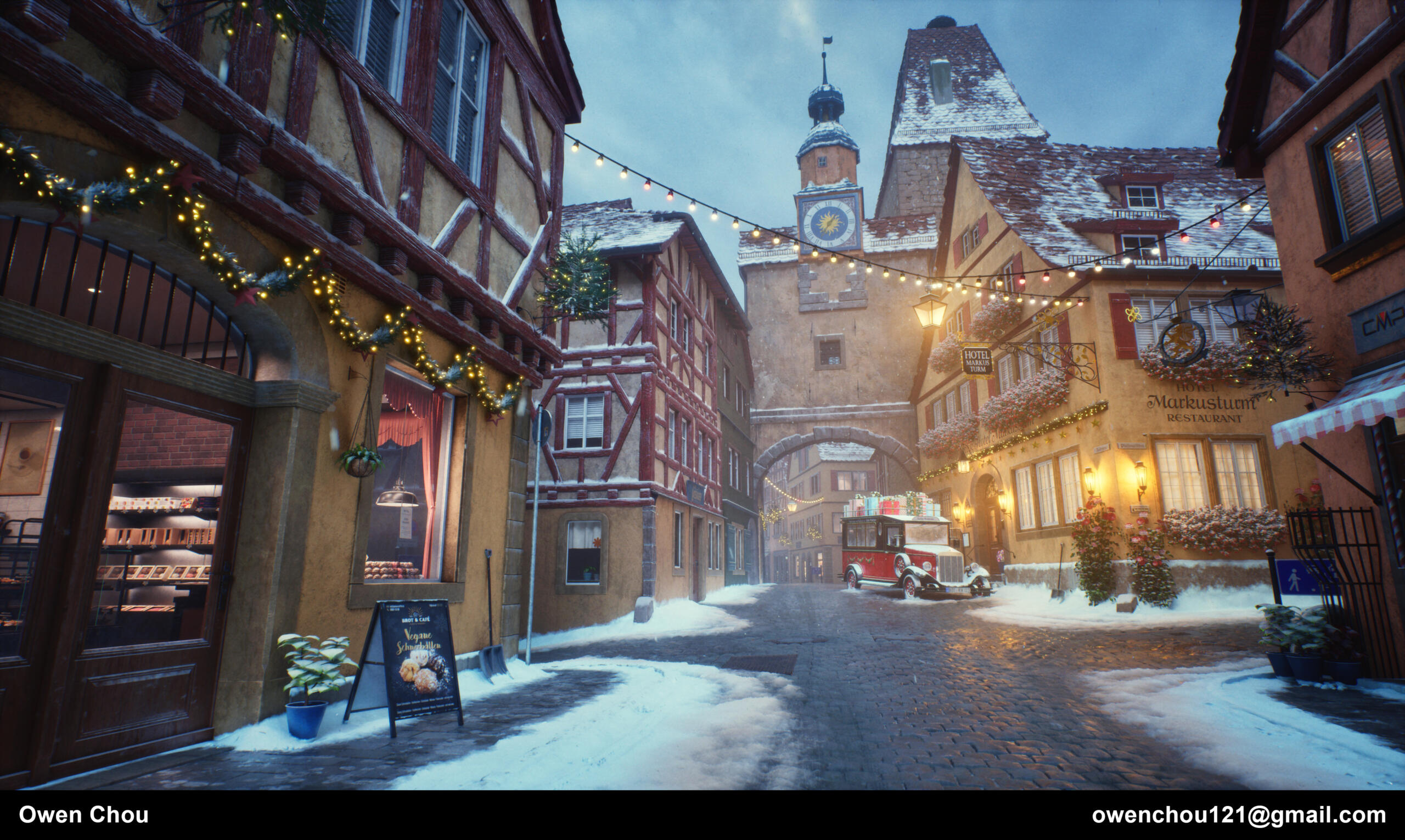
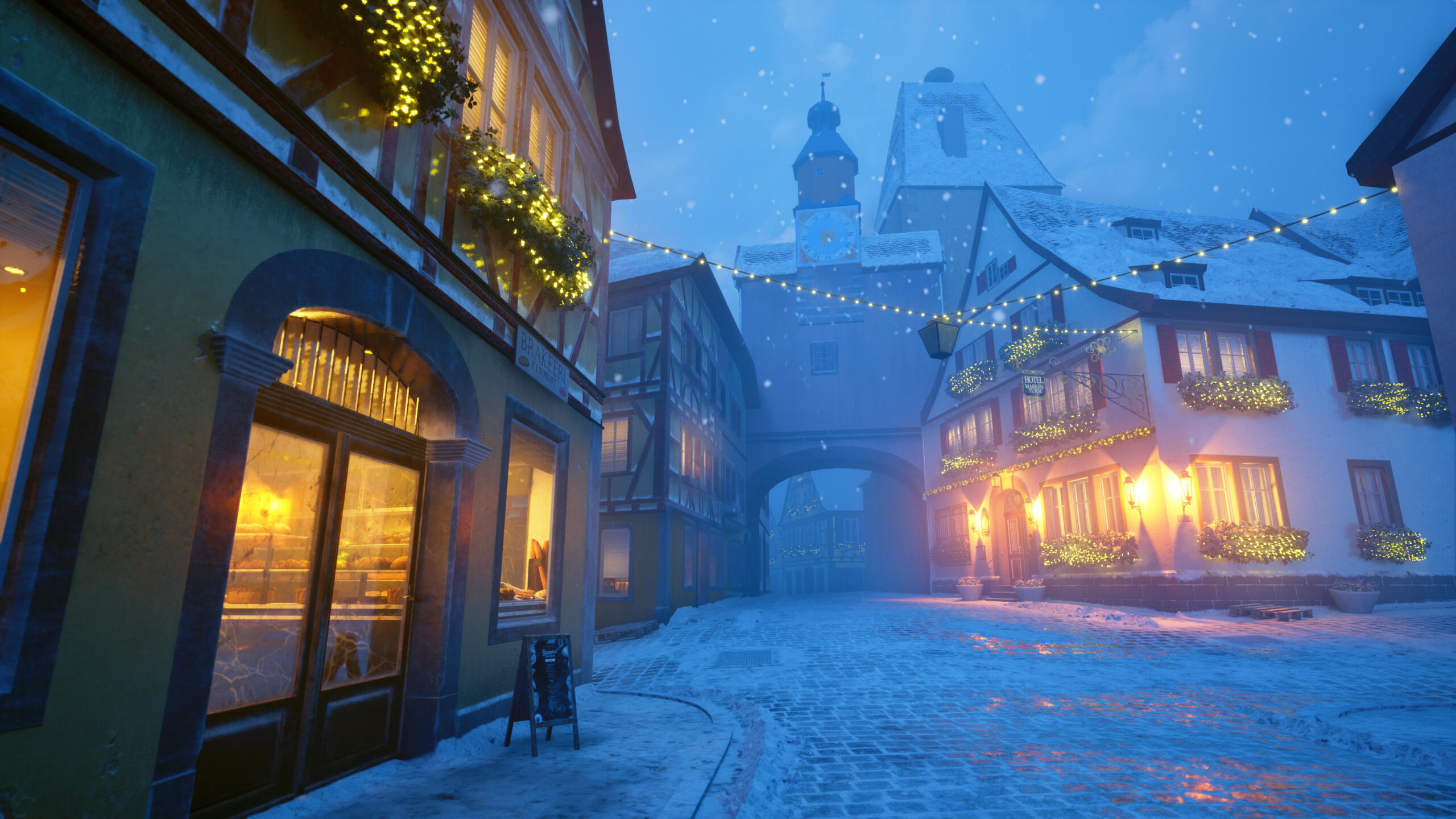
For this project, I wanted to create an environment inspired by the real German town of Rothenburg ob der Tauber. What initially drew me to this location was its beautiful, medieval-like architecture, along with the cozy winter atmosphere and festive Christmas vibe that the town is famous for. I’ve also always had a soft spot for snowy environments in video games, and some of my favorites include the opening of The Last of Us Part II and the entirety of God of War Ragnarok.
When I first created this project during my time at Think Tank Training Centre, I had a clear vision for what I wanted the environment to become, but I didn’t have the artistic and technical skills to bring that vision to life fully. Revisiting the project gave me the perfect opportunity not only to remake it with everything I had learned since then, but also to expand upon the original idea and push it much further.
Here is the before and after:
Blockout
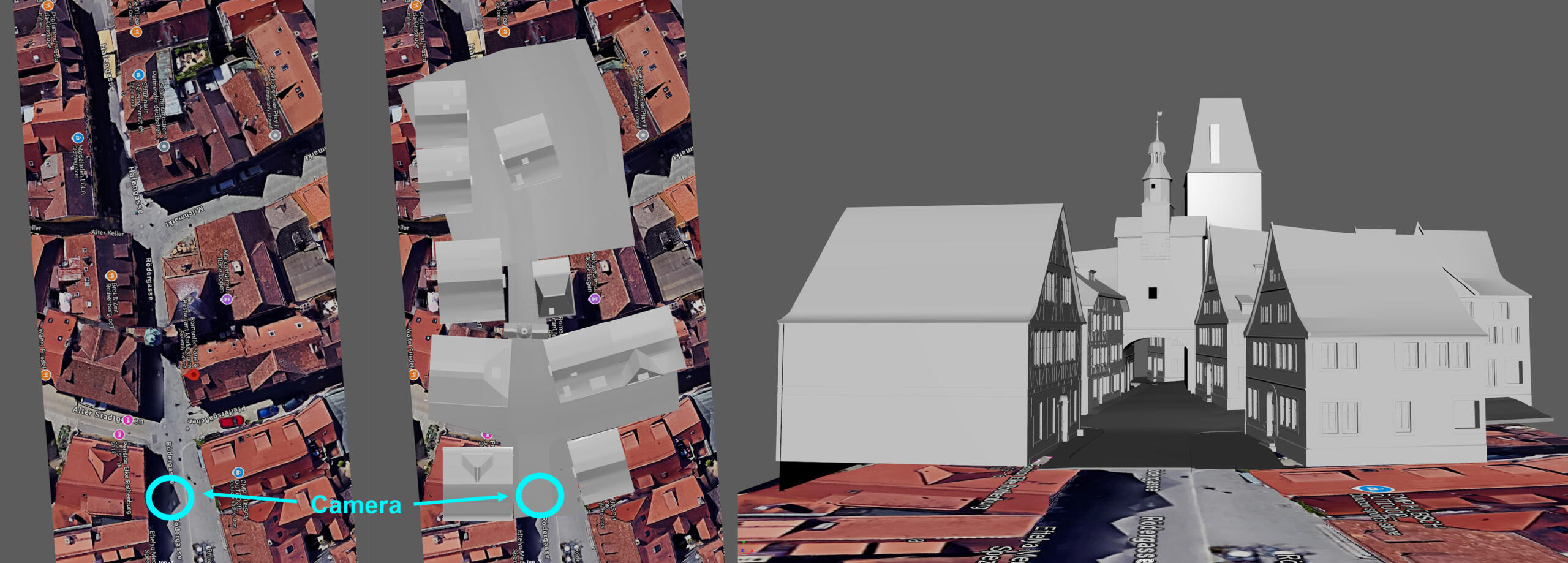
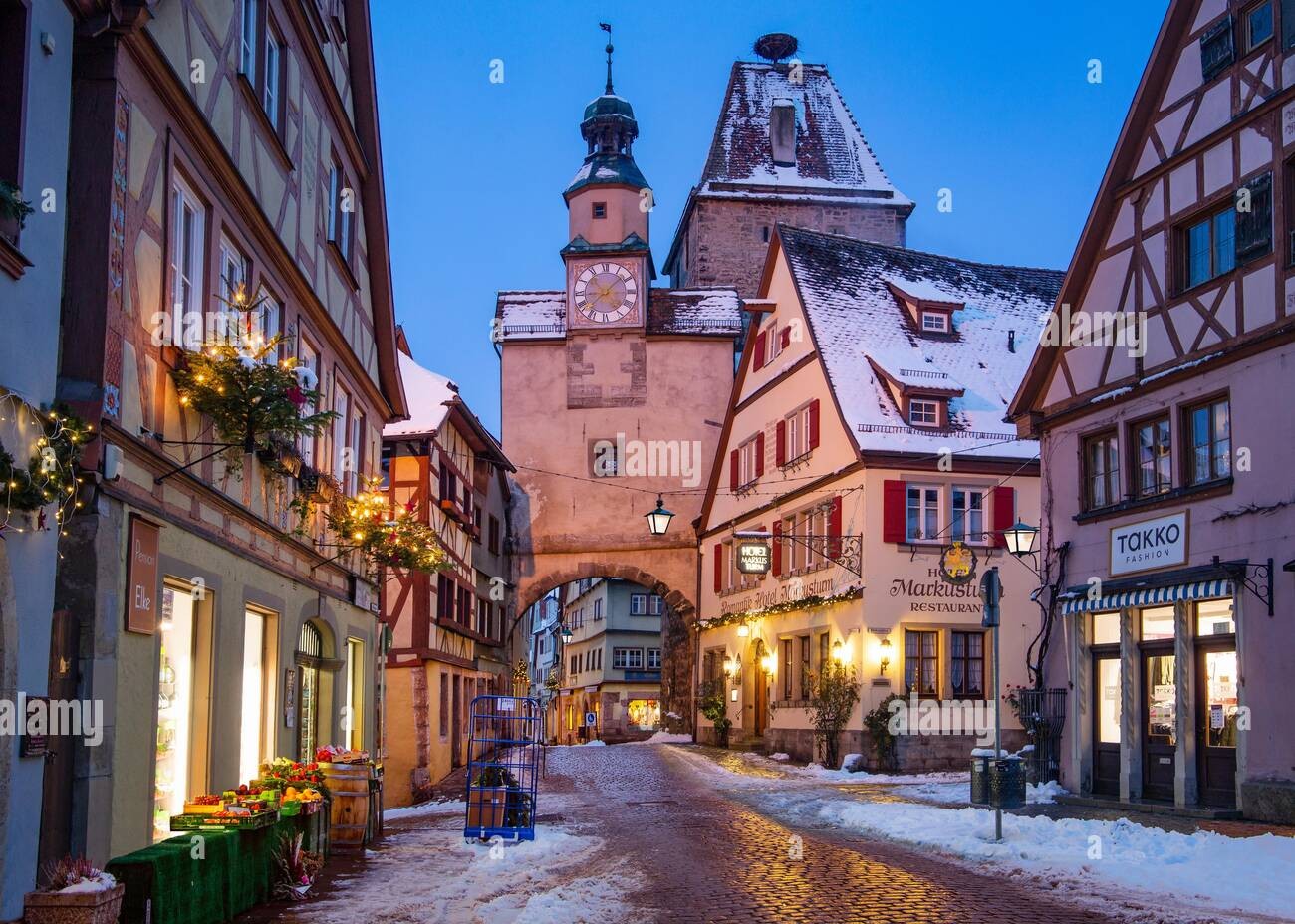
For the blockout, I took a screenshot from Google Maps and used it as an image plane in Maya, which gave me accurate proportions for all of the building layout in the scene. While staying faithful to the overall layout, I made a few adjustments to better suit a modular workflow. One of the biggest changes was correcting the wall angles. In the real town, many of the buildings have walls that have slanted angles, but this would make creating a modular kit impractical in 3D because I wouldn’t be able to snap the pieces together properly. Instead, I ensured that all of the walls were perpendicular, allowing the kit pieces to snap together seamlessly. Although the proportions of the walls ended up being different from the real location, these changes were necessary to adapt the environment for a game-ready modular workflow. I preserved all of the key architectural details, particularly the wood timber framing, so the buildings still closely matched the appearance of the real town from the main shot.
Lighting & Mood
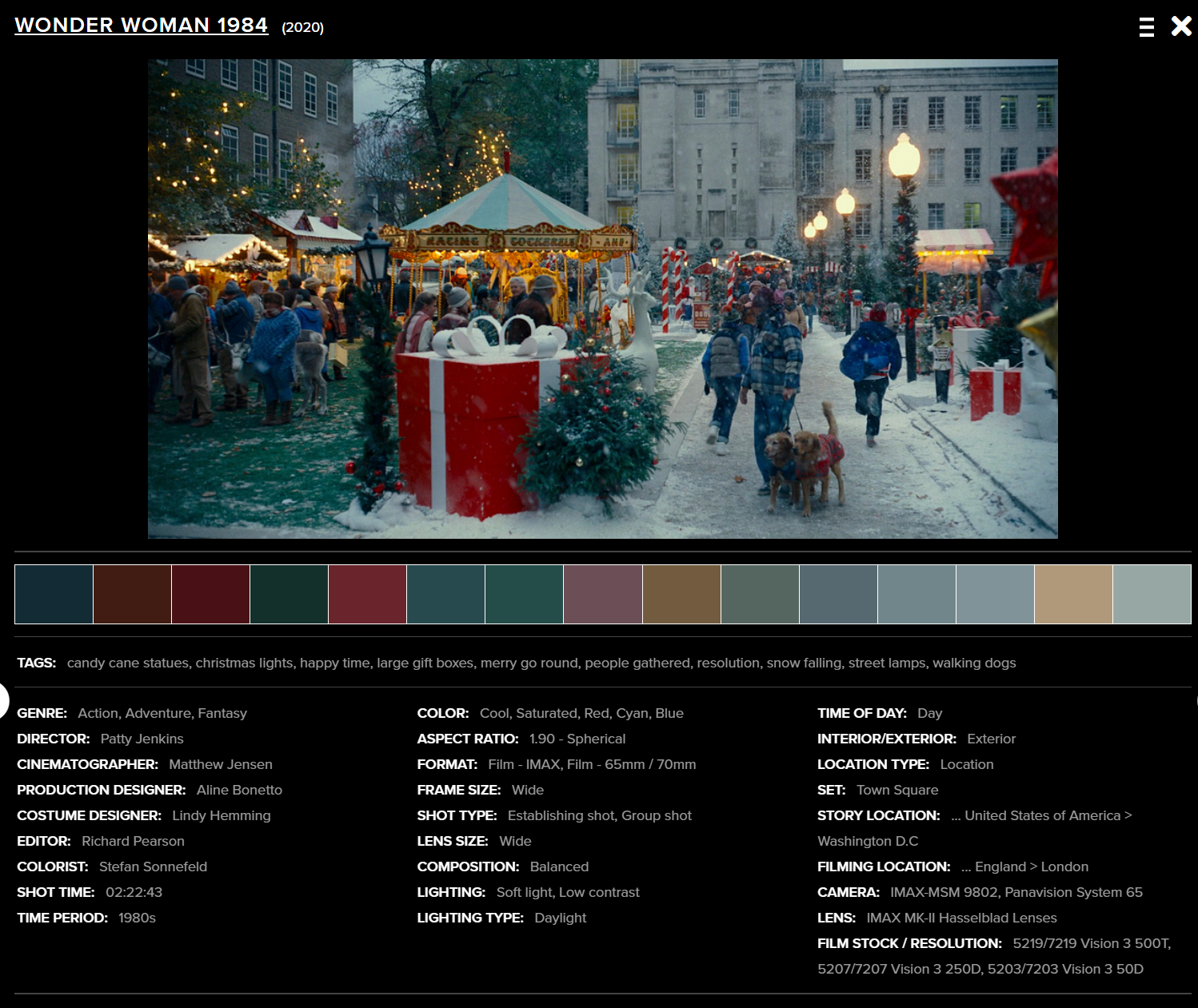
One of the biggest challenges in this project was establishing a lighting setup and color palette that captured the mood I envisioned. My goal was to strike a balance between a cold, winter atmosphere and the warmth of the Christmas decorations and artificial lighting. This was one of the biggest challenges of working from a real-world photo rather than concept art. With concept art, the artist has already established the lighting, color palette, and composition, providing a clear visual direction to follow. However, I really enjoyed the challenge of figuring out these elements on my own and making those creative decisions myself. This process pushed me to grow as an artist and strengthened my ability to develop a visual direction from the ground up.
This reference from Wonder Woman 1984 became a great starting point. The scene features cool, desaturated buildings and surroundings contrasted by warm artificial lights and vibrant pops of red from the holiday decorations. That contrast creates a cozy, festive atmosphere without losing the feeling of a cold winter day, and it became the mood I aimed to achieve throughout my environment.
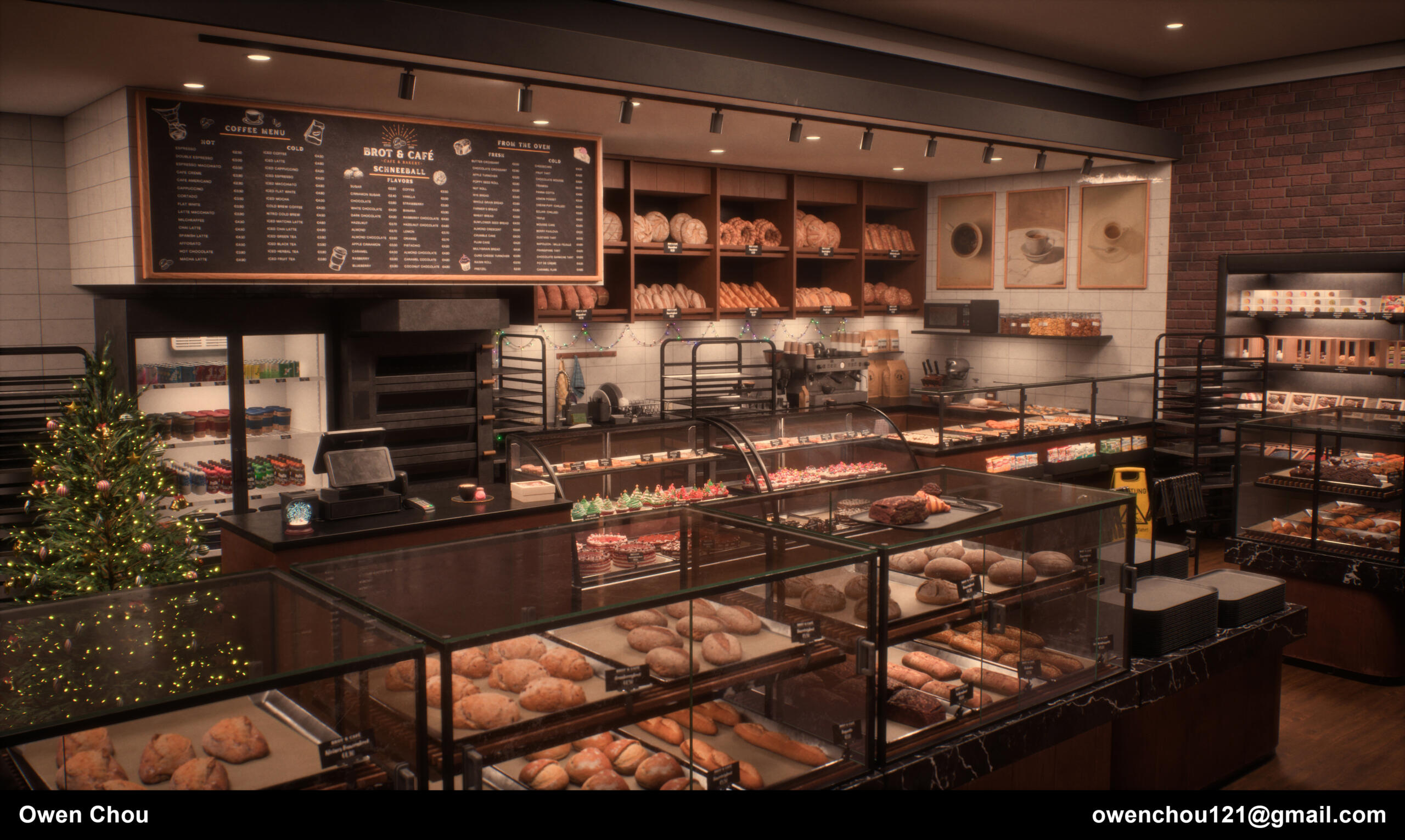
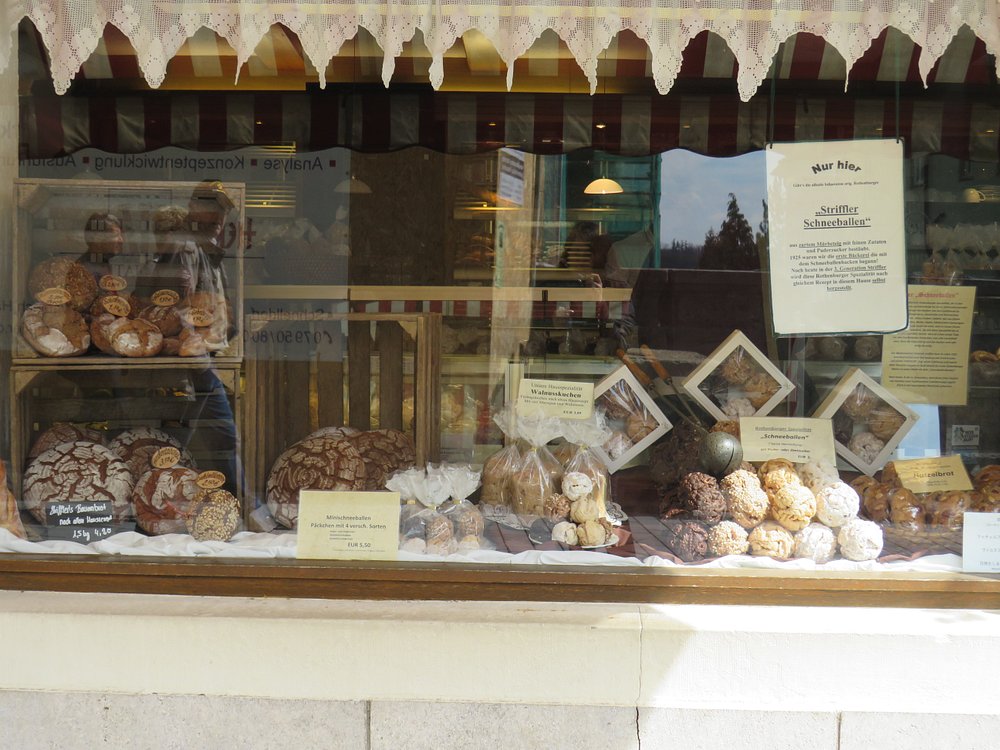
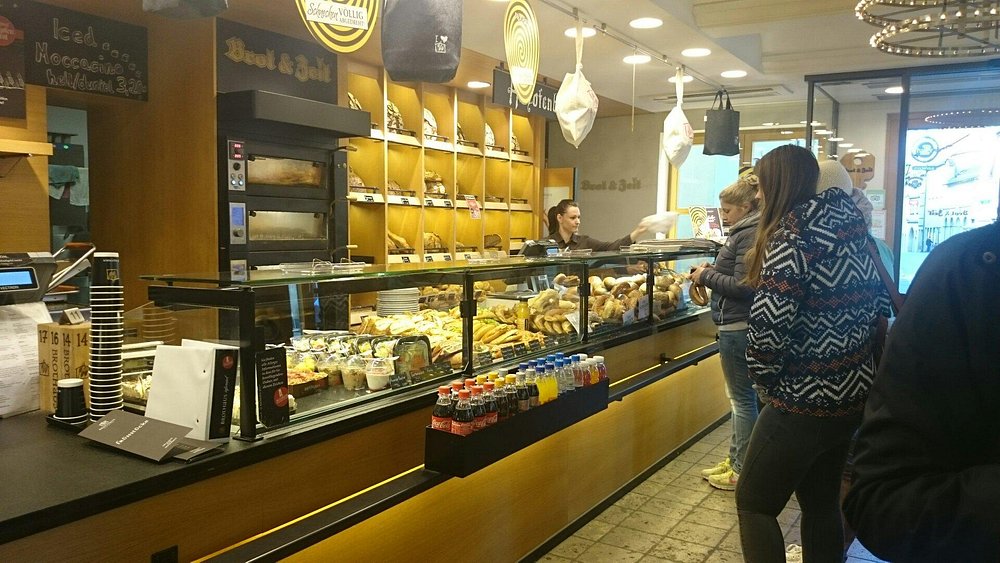
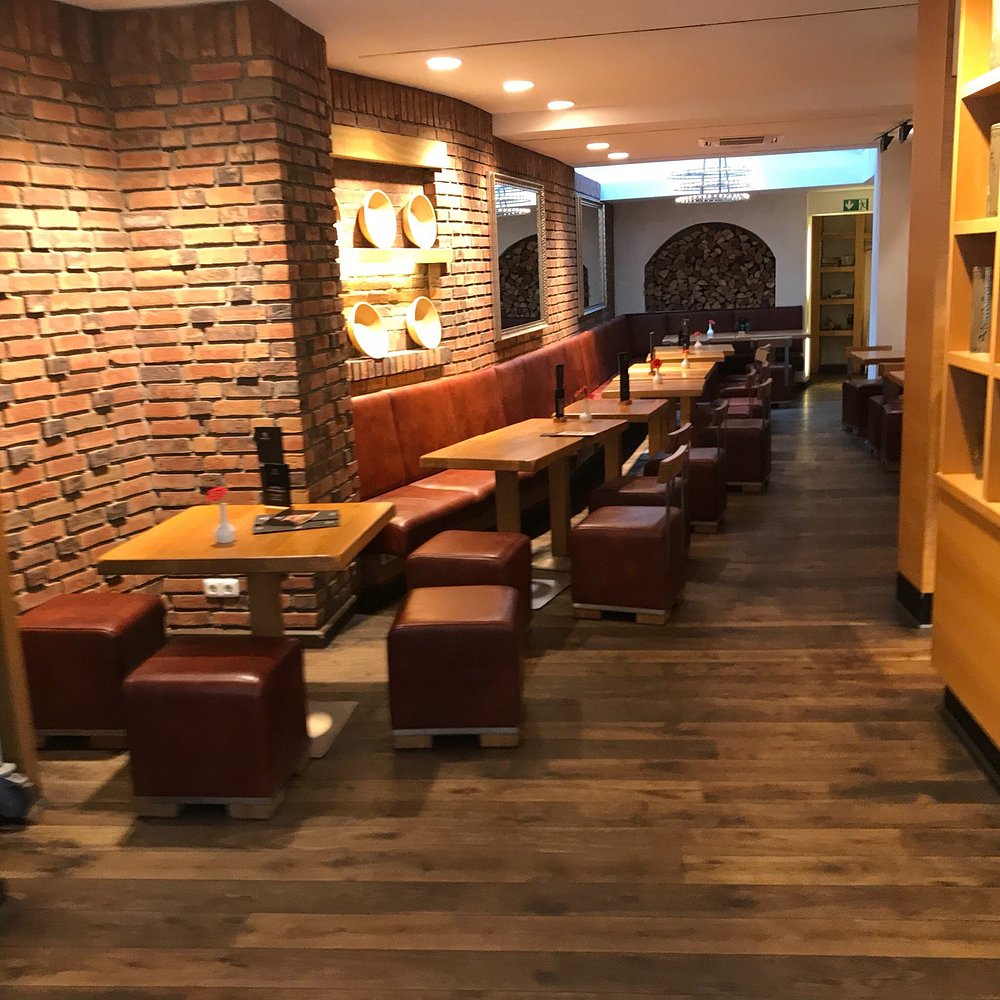
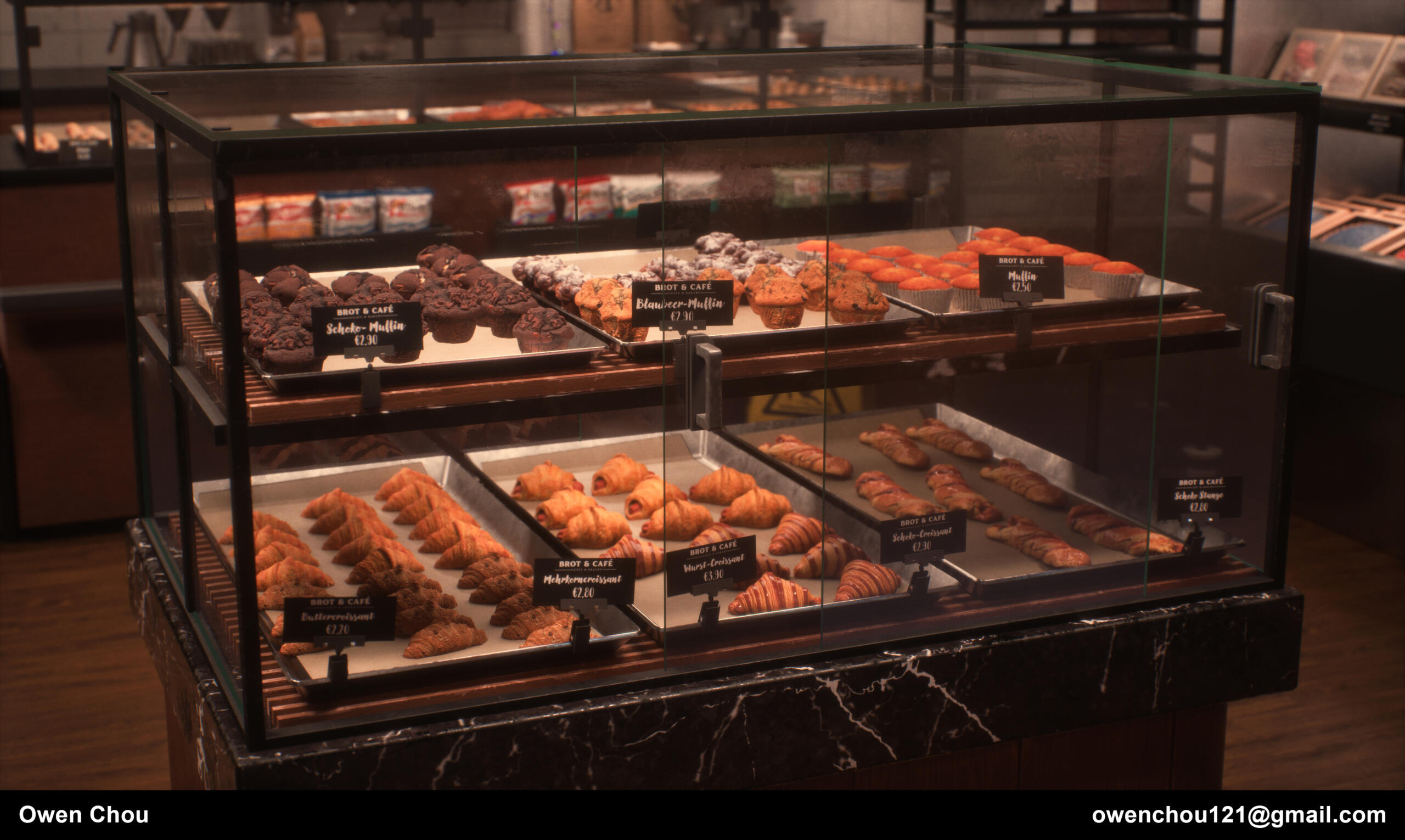
As for the bakery scene, I collected a ton of reference images of bakeries from Rothenburg and Europe. These are a few examples that heavily inspired the interior design. The first reference image served as the primary inspiration for the shot of the pastry window display viewed from outside the bakery. The second reference image inspired the interior layout, especially the glass panels next to the cashier. As for the third reference image, I took inspiration from the brick wall, wood plank flooring and the warm lighting.
Historical Authenticity
Although I made many changes to make the environment more appealing for a game, it was extremely important to me to preserve the town’s historical authenticity while translating it into a game environment. To achieve this, I did extensive research on many elements that make this town so unique. Here are a few examples:
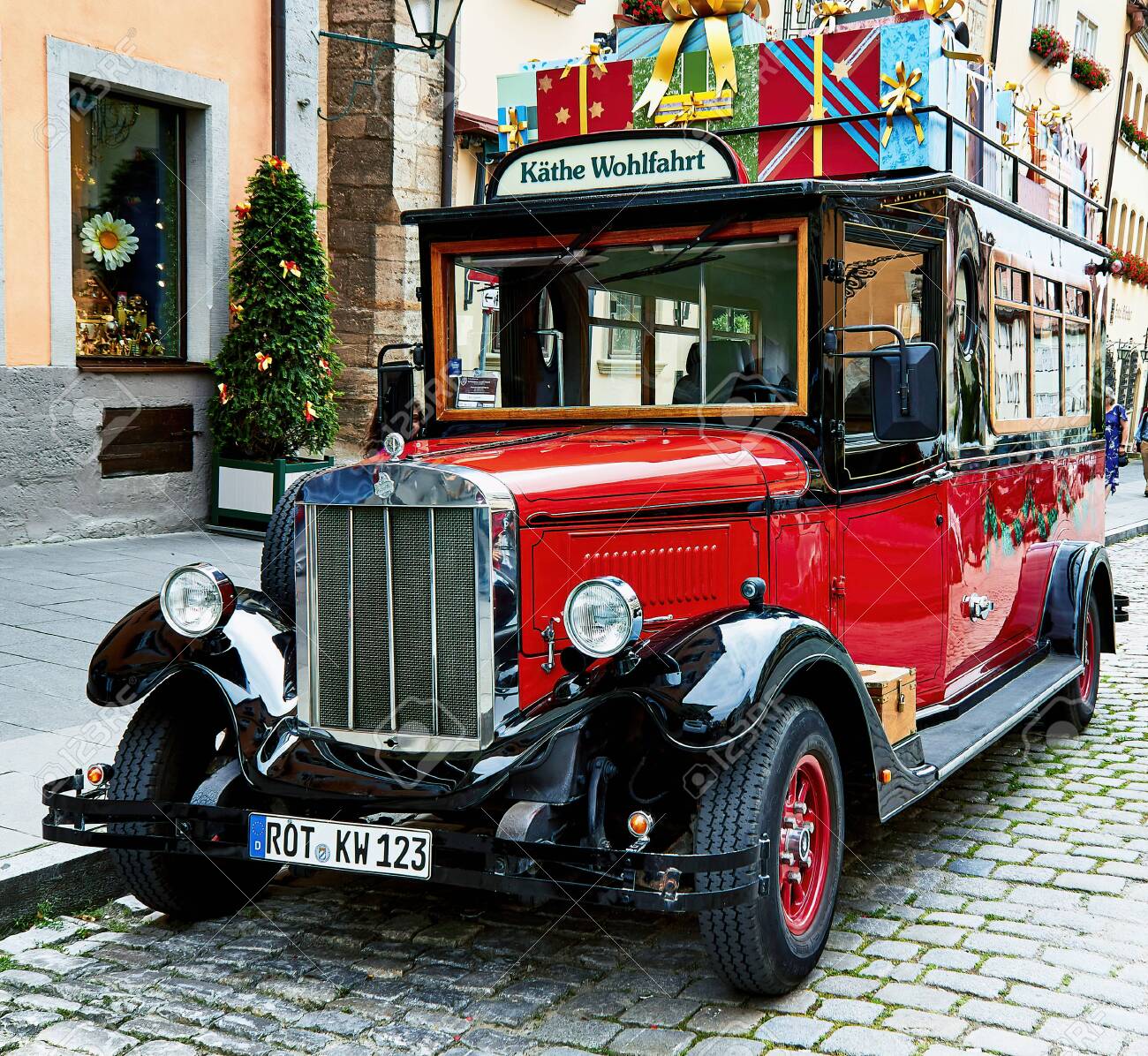
Christmas Car:
This vehicle was not part of the area I was basing my environment on and was added later because I felt the environment needed a stronger focal point. I also discovered it while researching Rothenburg, and it immediately caught my attention because of its unique design. Although the vehicle is located in a different part of the town, making its placement in my scene inaccurate, I felt the creative decision was justified because it made the exterior environment more visually engaging. Its vibrant red complemented the scene’s color palette while naturally drawing the viewer’s eye toward the focal area.

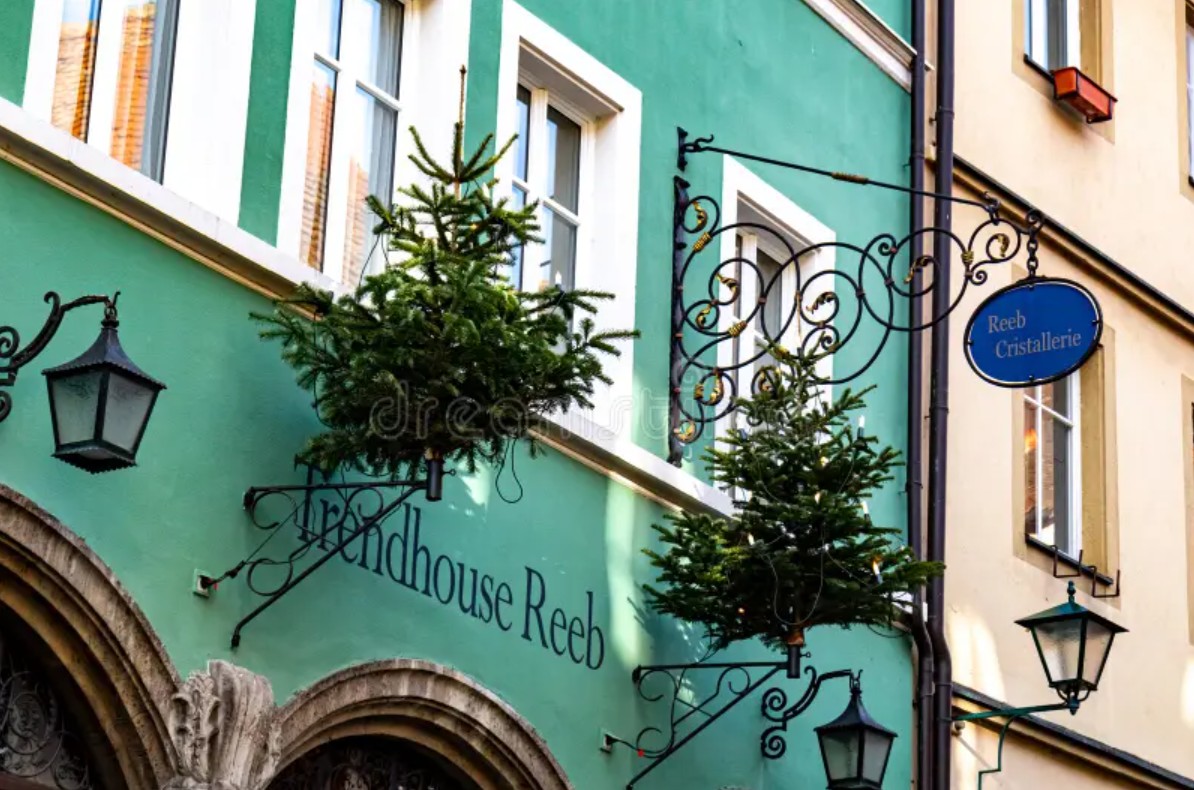
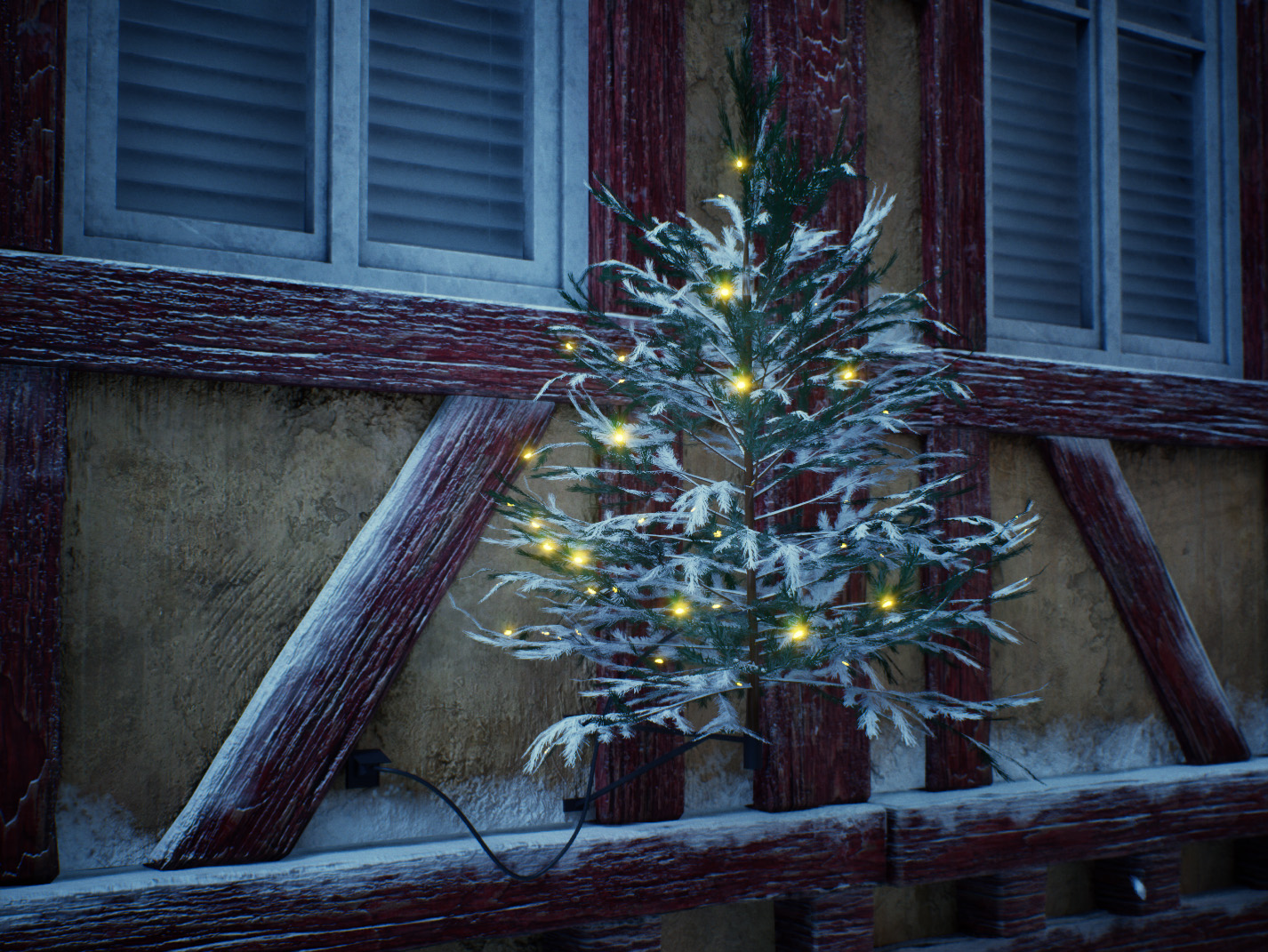
Hanging Mini Christmas Tree:
While my bakery interior features a full-sized Christmas tree, I felt that the hanging miniature Christmas trees in the exterior were such a unique element of Rothenberg. It became a detail that I knew I had to incorporate into my environment to better capture the festive atmosphere of the town.
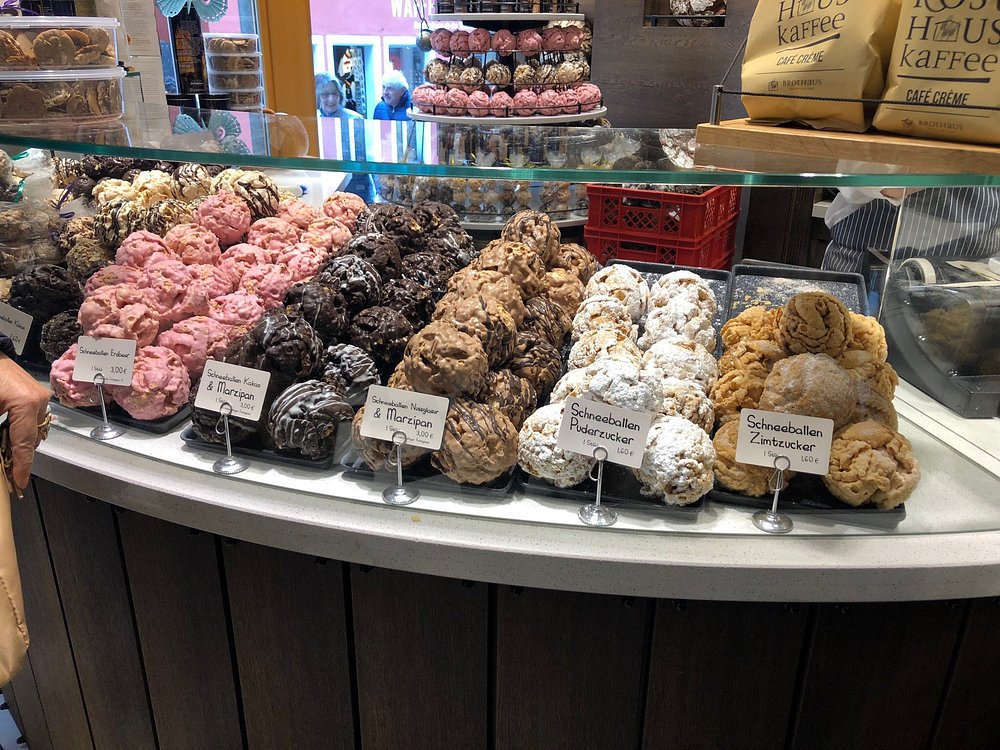
Schneeballen:
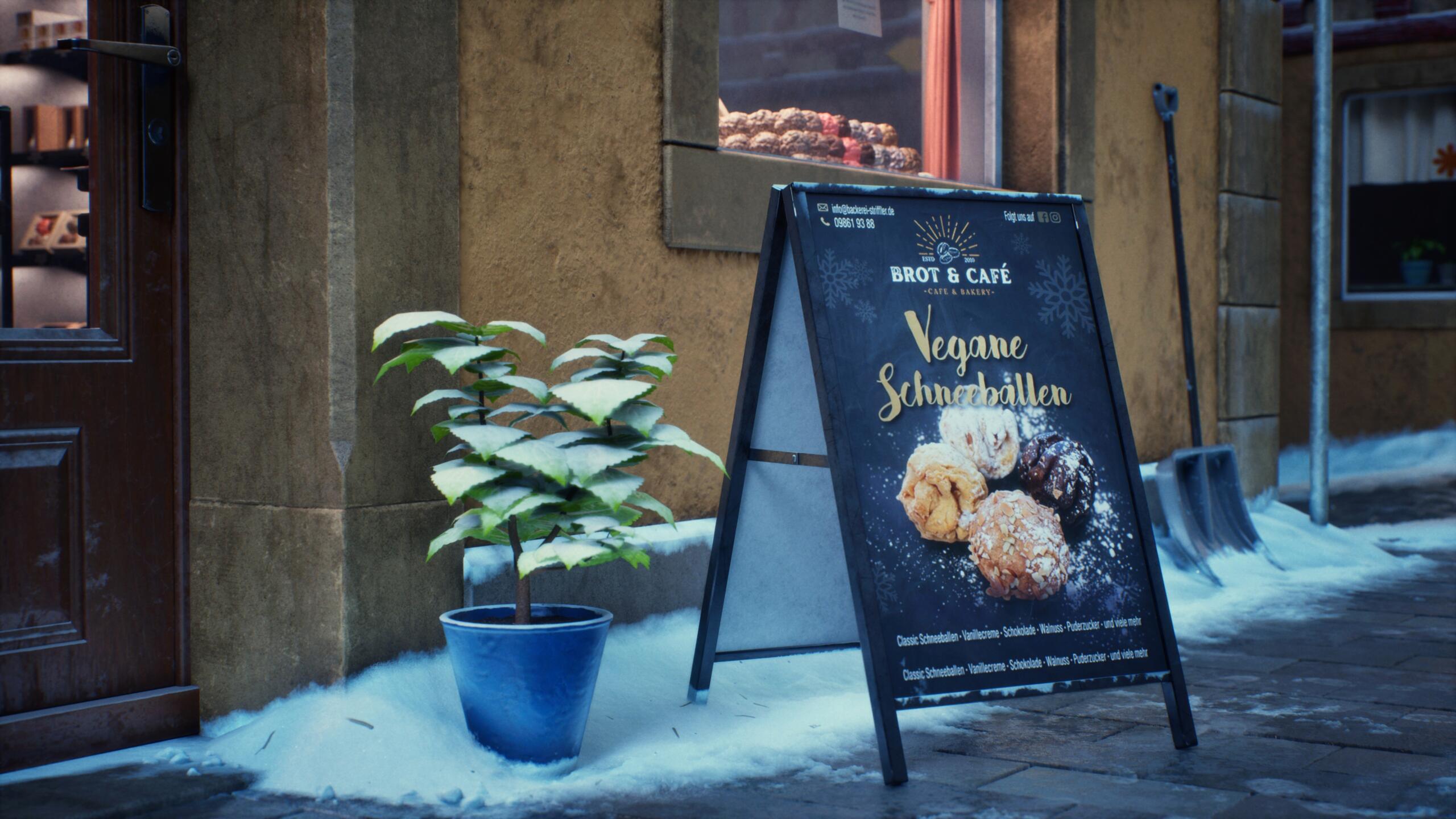
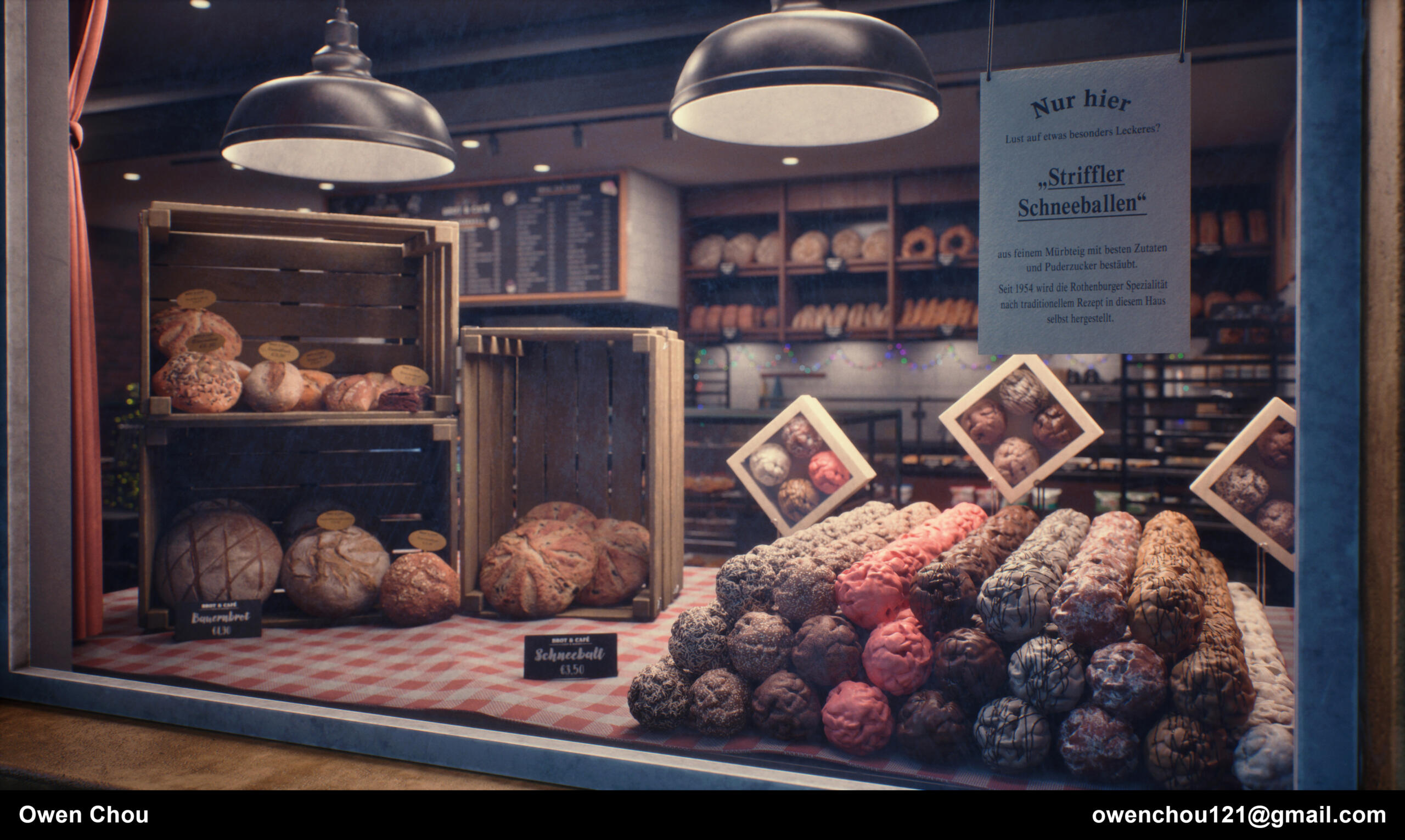
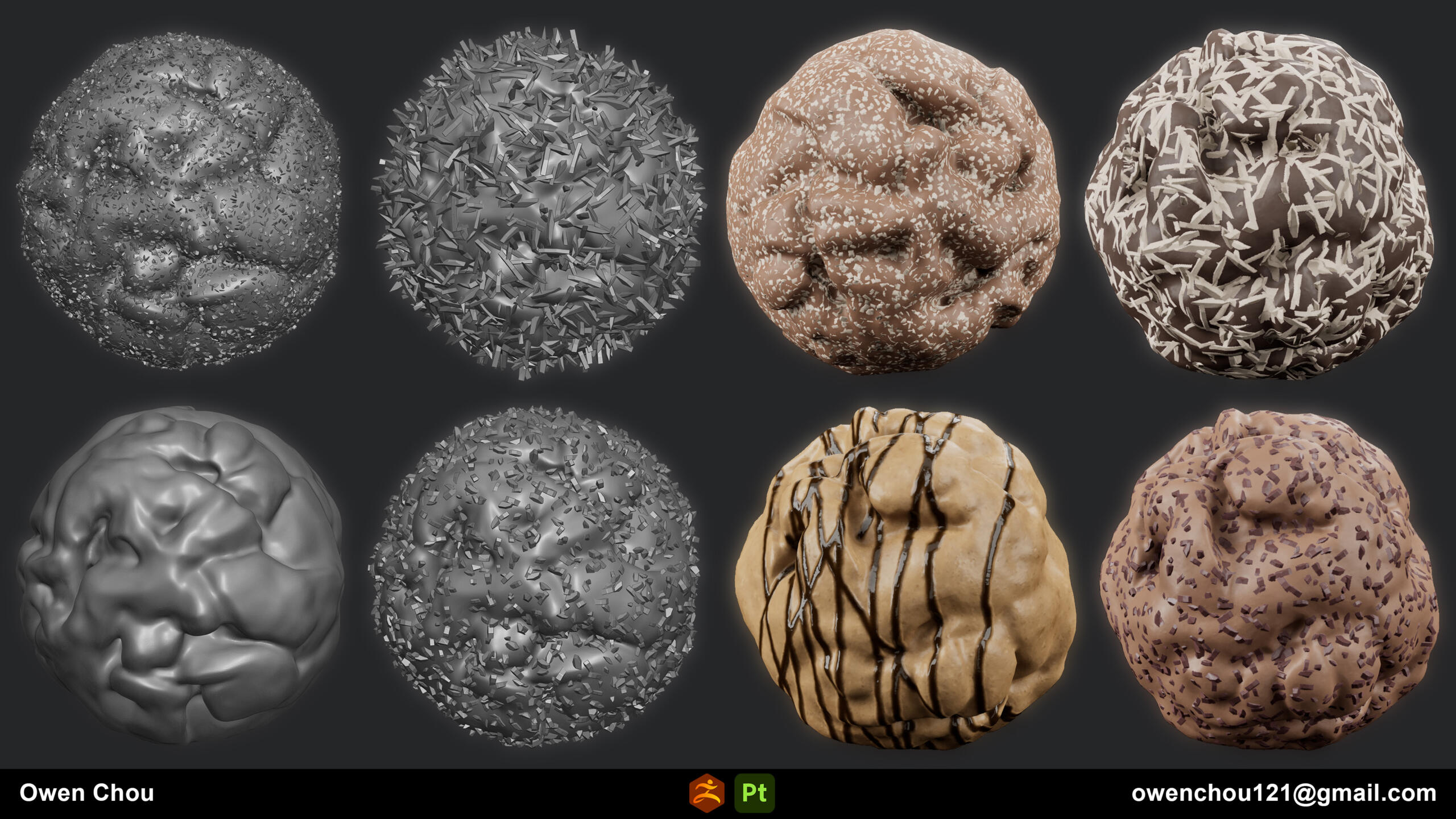
Schneeballen are traditional German pastries made by deep-frying strips of shortcrust dough that have been woven or wrapped into a ball. They are typically dusted with powdered sugar or coated in chocolate, cinnamon sugar, nuts, or other sweet glazes and toppings. It is widely recognized as Rothenburg ob der Tauber’s signature local specialty and I knew that I had to include this for my project.
Bakery menu and prices:
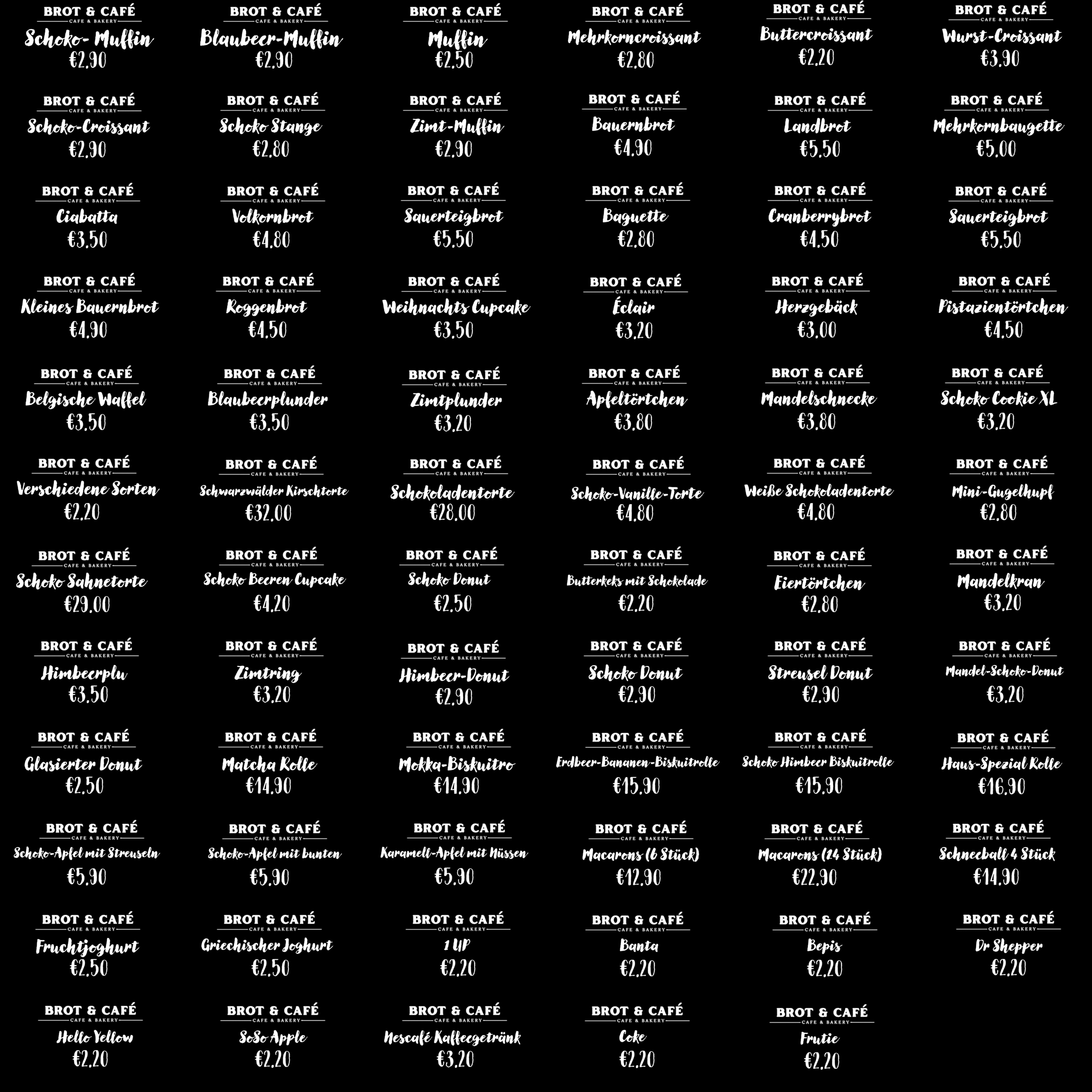
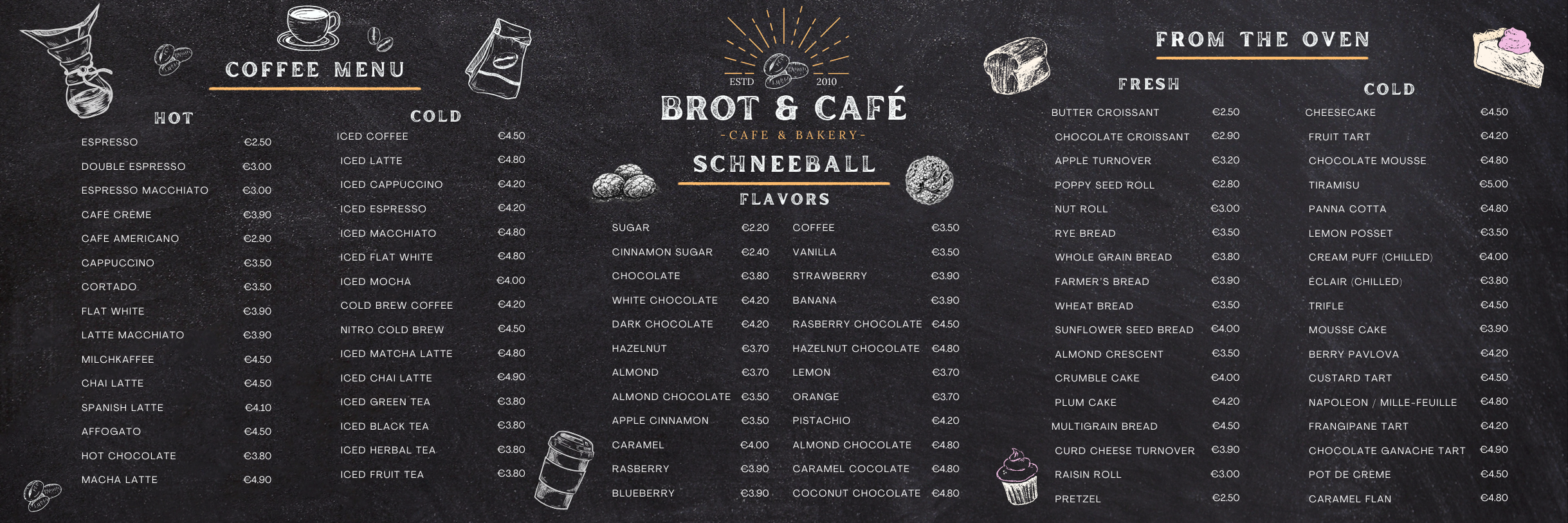
It was also important to me to include authentic German bread names and realistic prices for each item in the bakery. To create the menu itself, I took advantage of Canva’s one-month free trial.
If I were to go back and make some changes, I would also translate all of the menu items from English into German to further improve the authenticity. However, this is such a tiny detail that most people would never notice, but as environment artists, we love to be nitpicky.
Materials
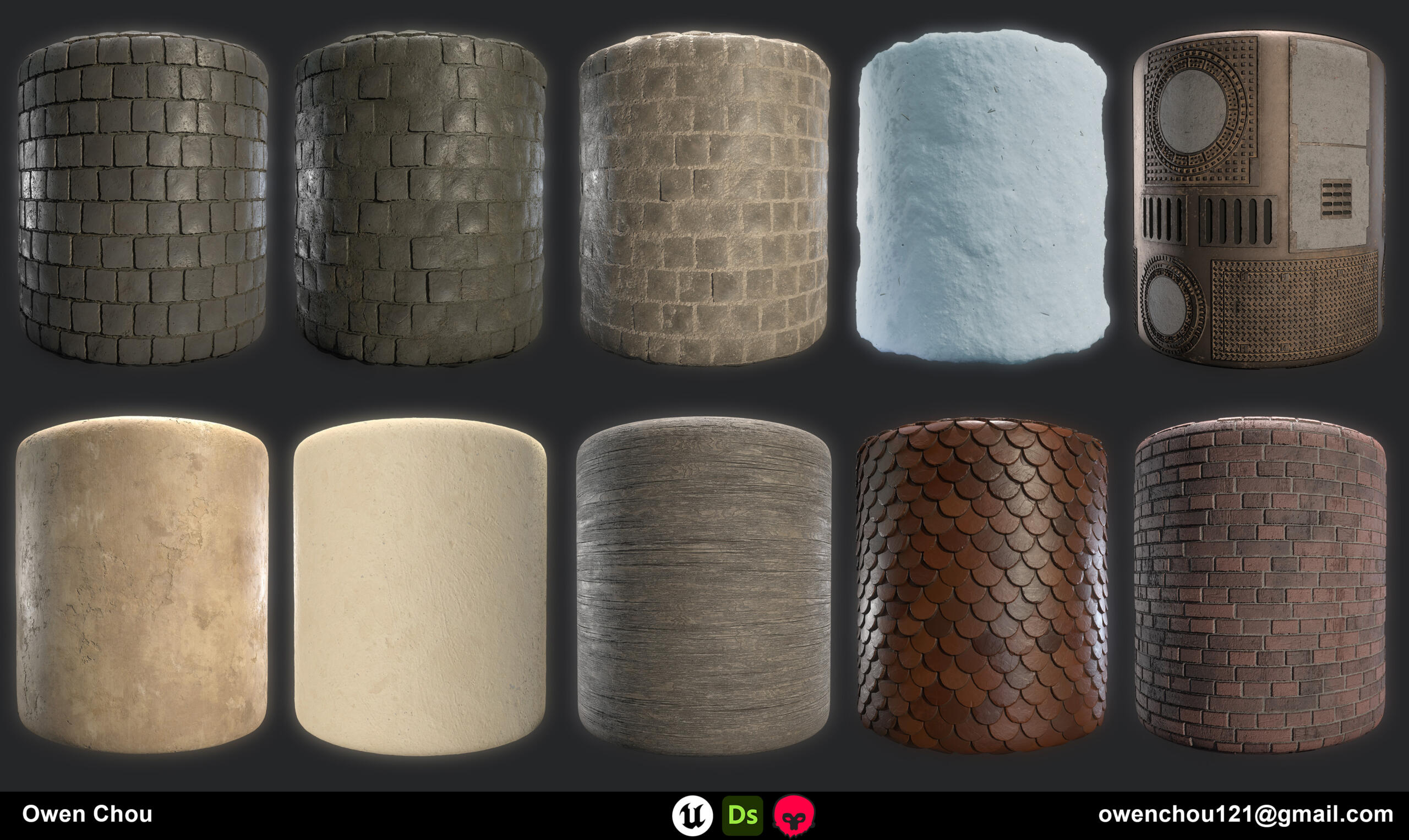
Tileable Materials:
These are some of the materials I created in Substance Designer for this project. While I made many more for this project, these are the ones I’m most proud of and wanted to showcase.
Cobblestone Road Material:
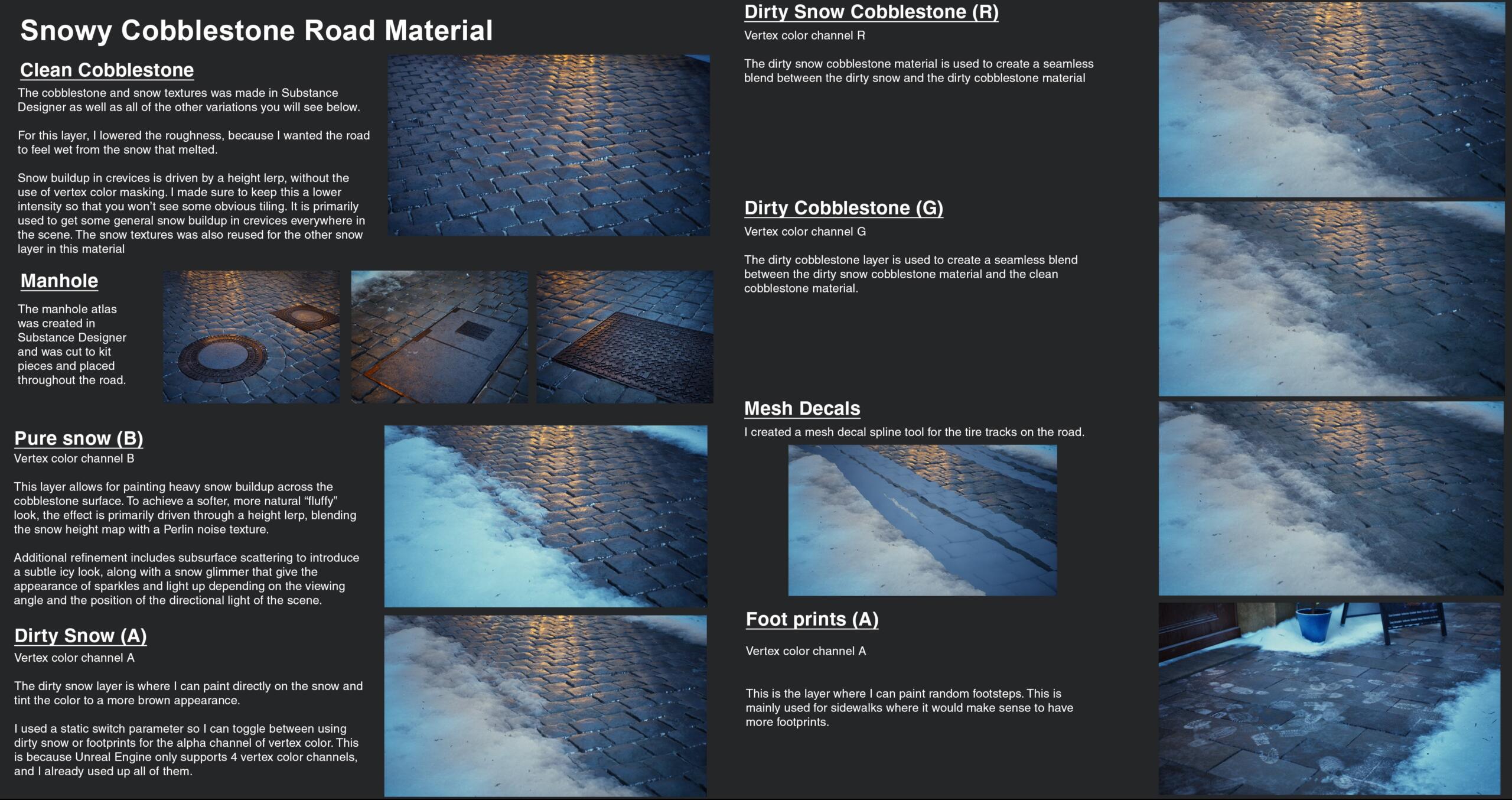
The snowy cobblestone road material was by far the most complex material that I made for this project. It takes advantage of Nanite displacement to create realistic depth with the cobblestone and snow.
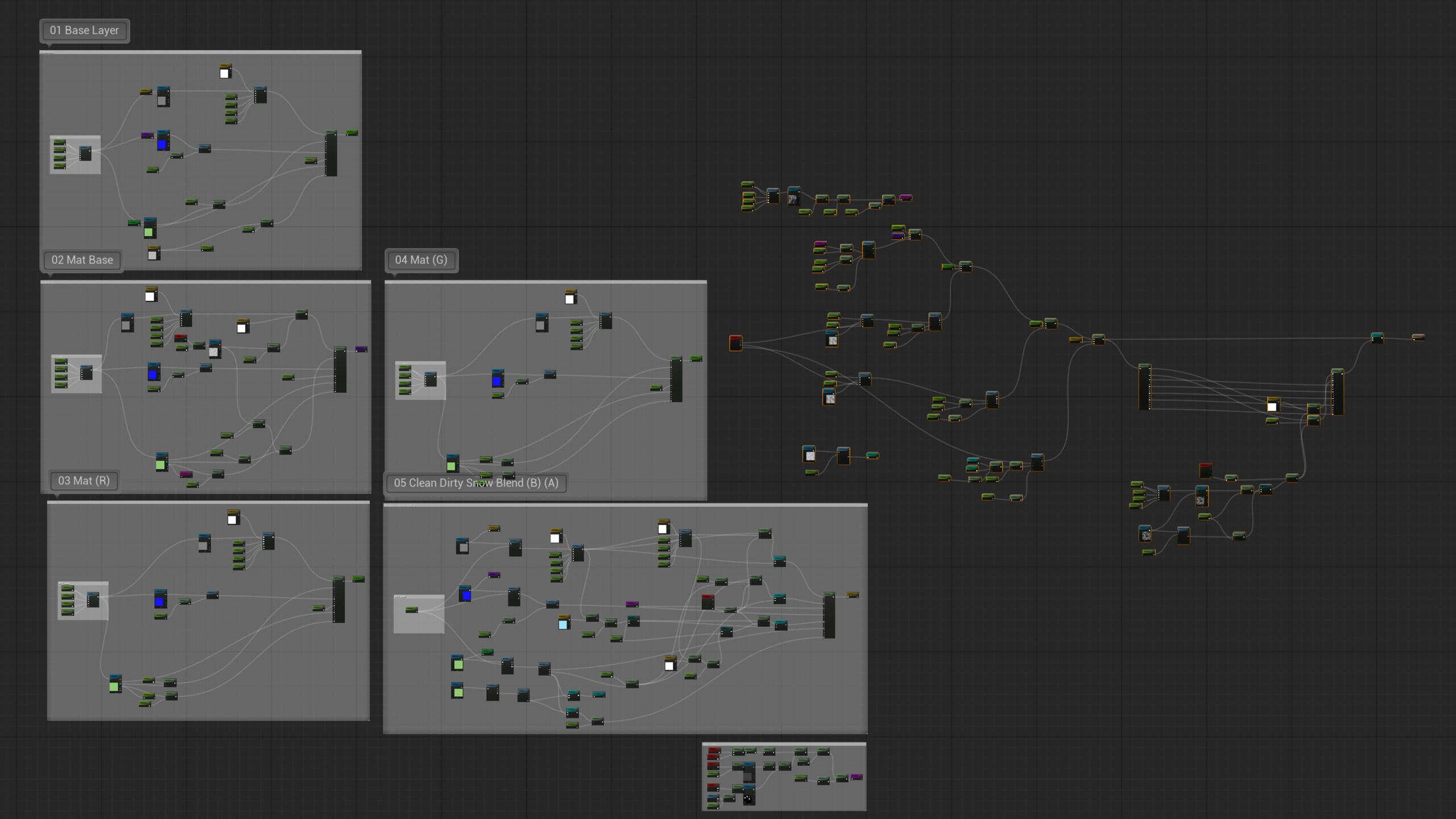
Here is a glimpse of the entire material graph in Unreal Engine 5. Although I definitely could’ve done a better job at organizing the graph, the huge benefit of creating your own shader is that you can tailor it to meet your exact needs, rather than working off of one that is premade and doesn’t have all the features you need. This setup was heavily inspired by Hoj Dee’s “Nanite Tessellation + Vertex Painting” video on YouTube. I highly recommend everyone check that out if you want to learn how to set up vertex paint with Nanite displacement. YouTube Link Here!
If you have any additional questions, feel free to reach out on LinkedIn, ArtStation, or Instagram, and I will happily answer any questions.
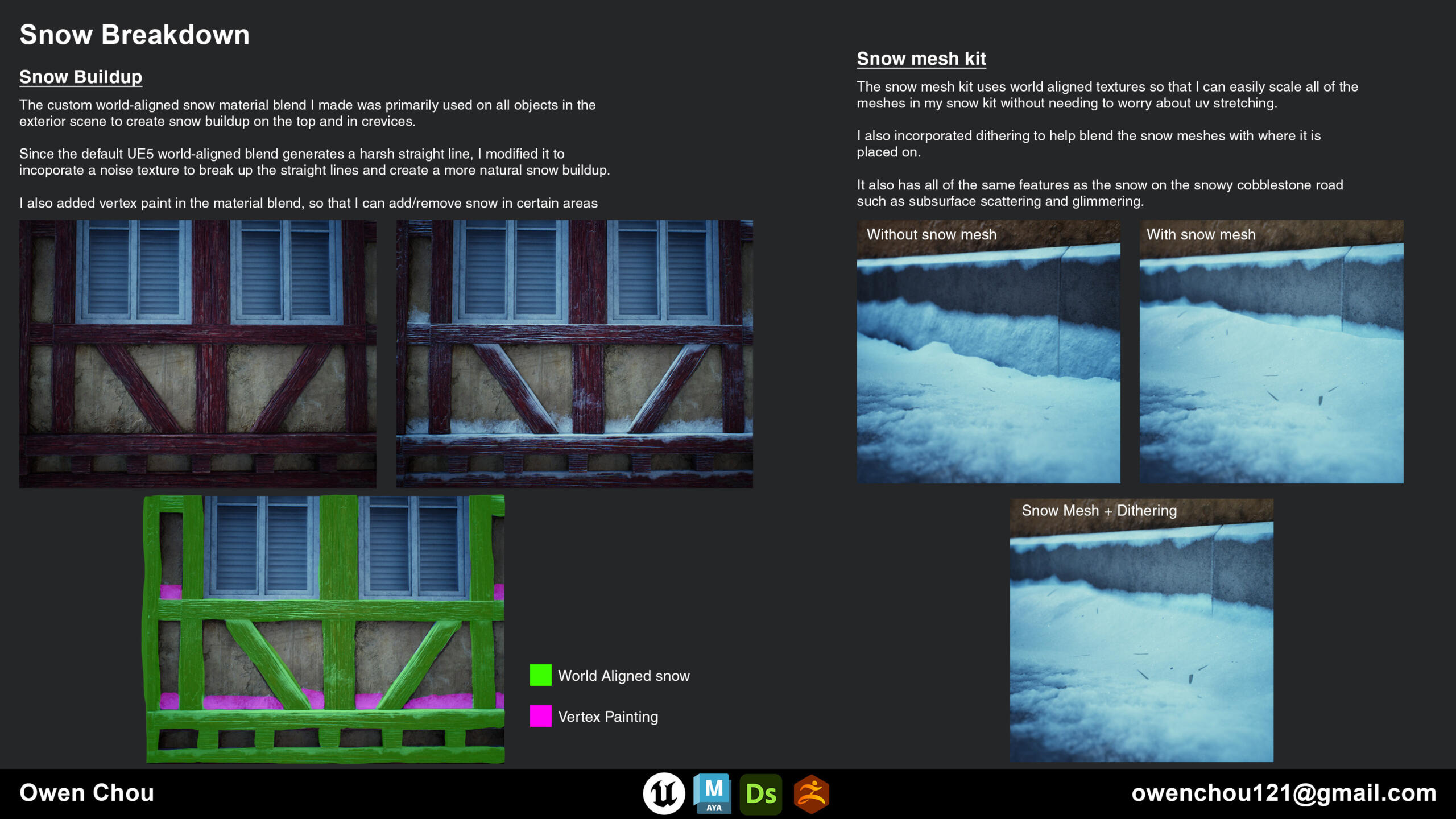
Snow Breakdown:
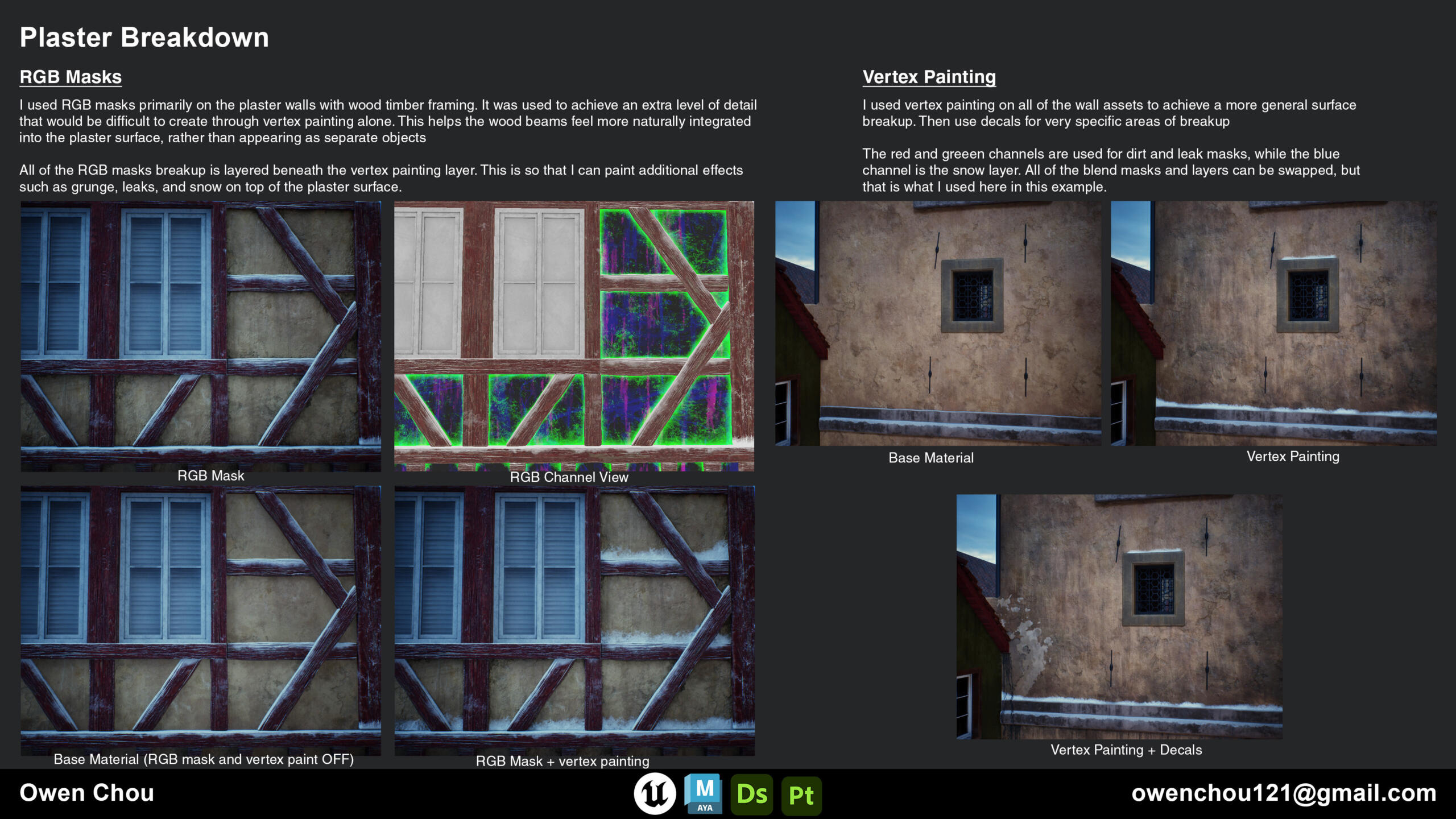
Plaster Breakdown:
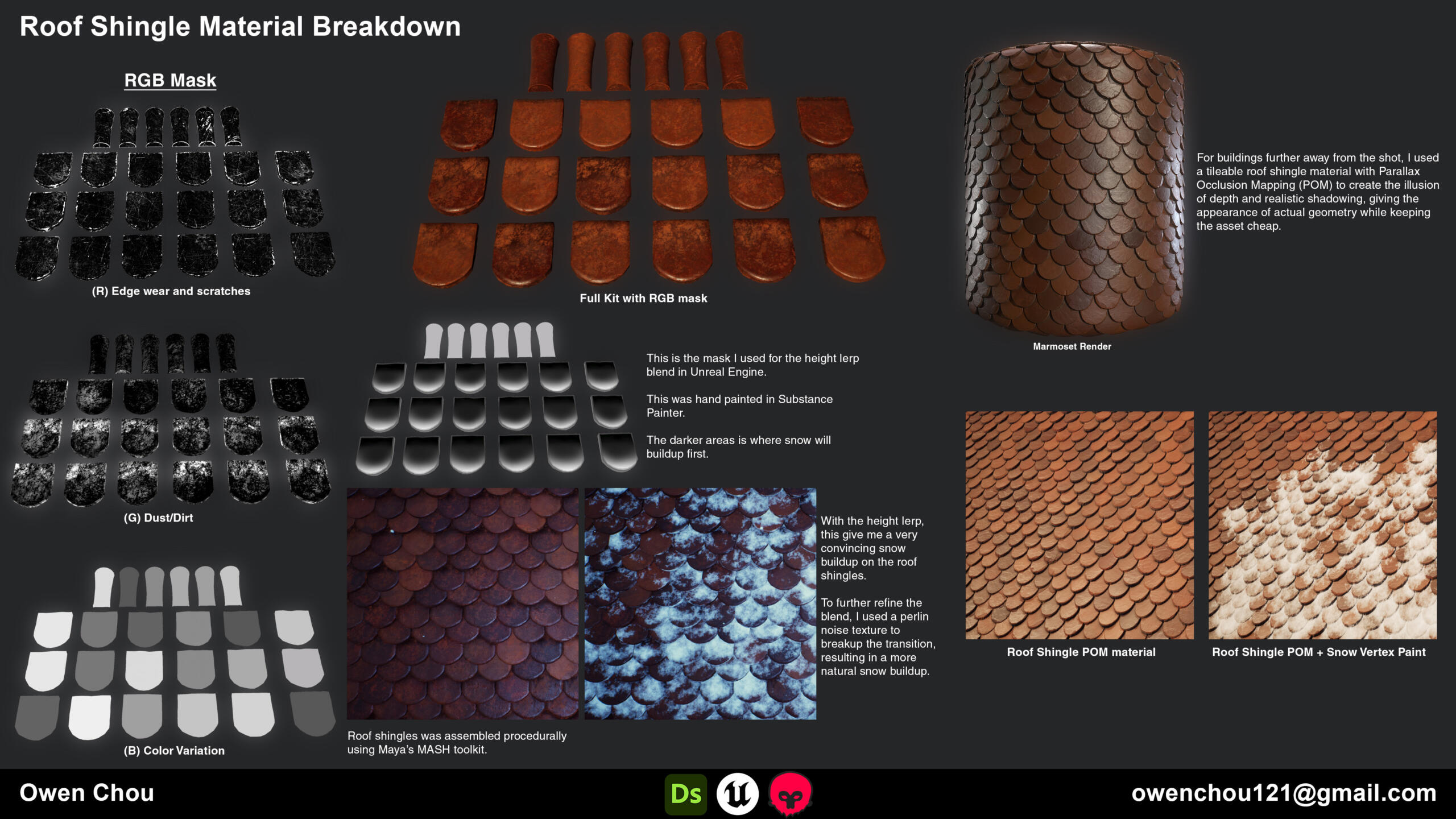
Roof Shingle Breakdown:
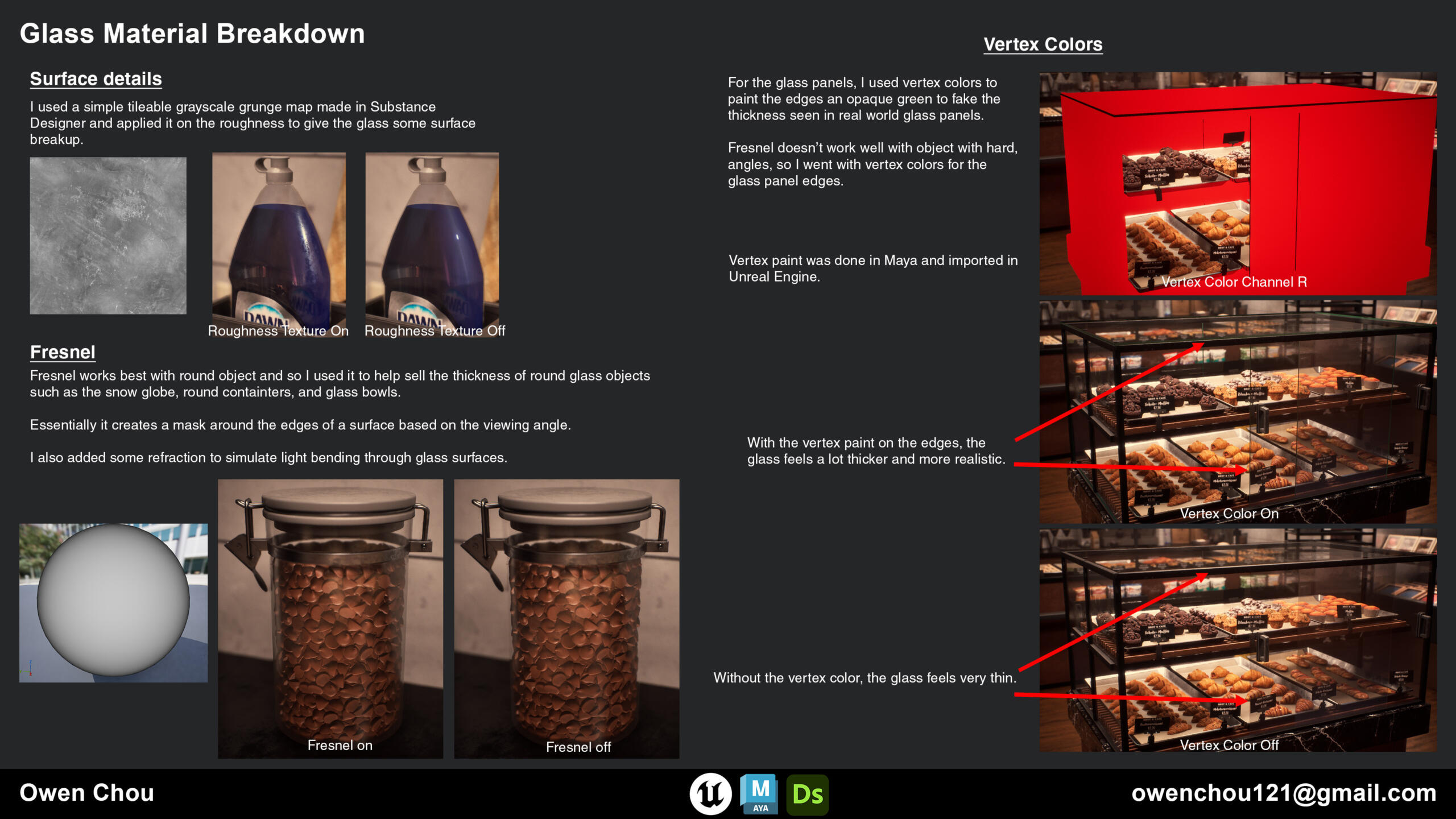
Glass Breakdown:
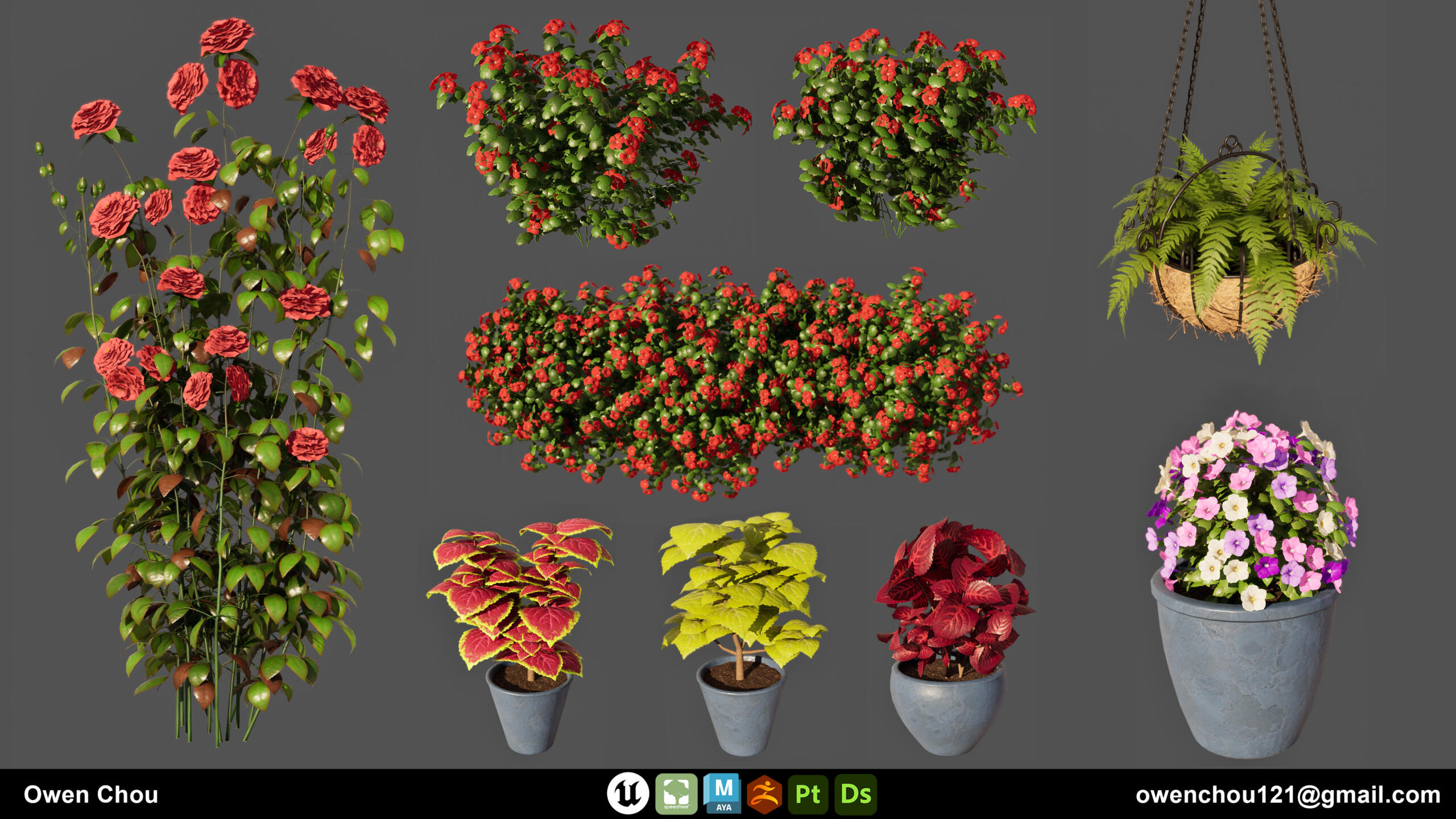
Foliage
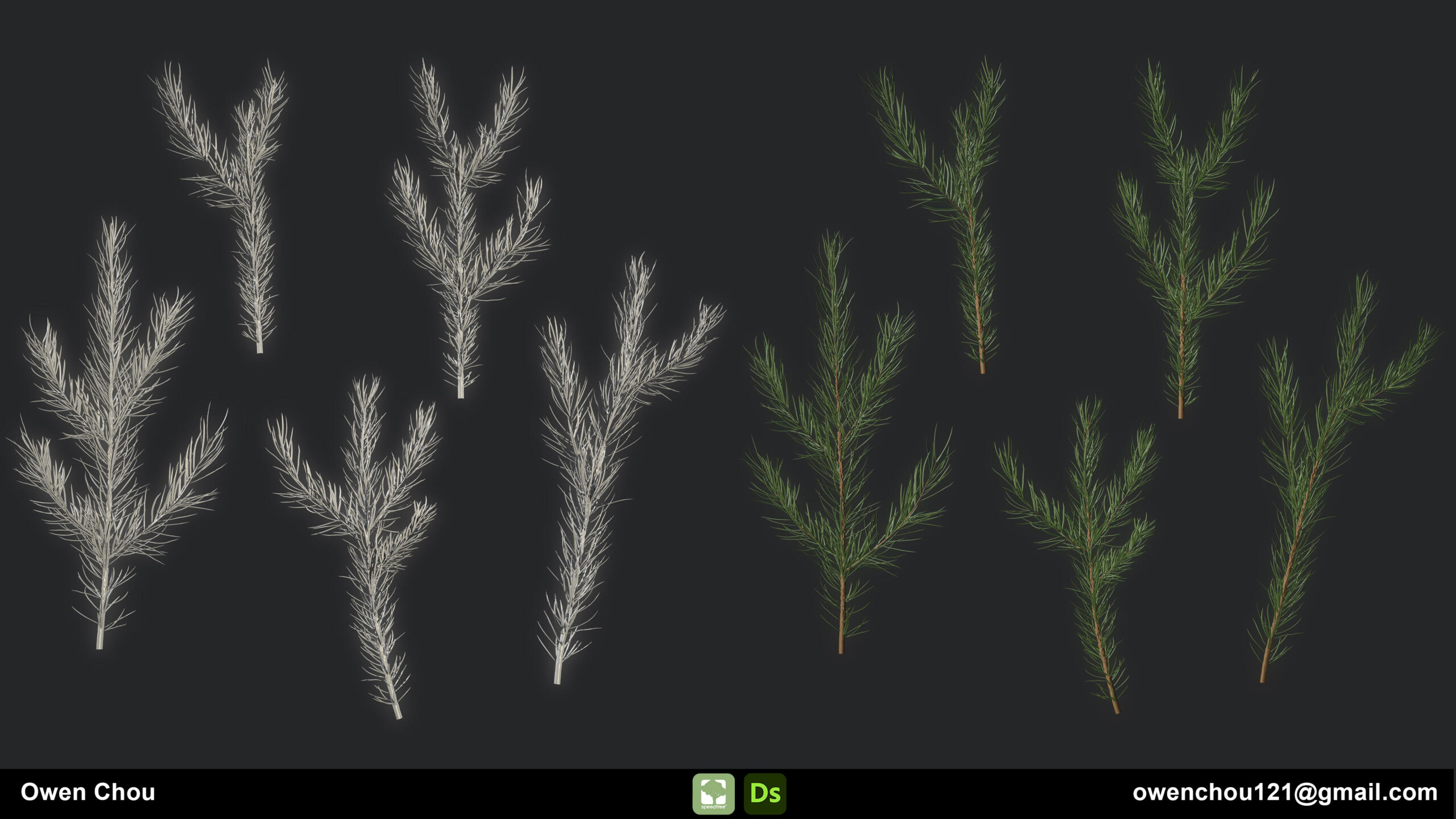
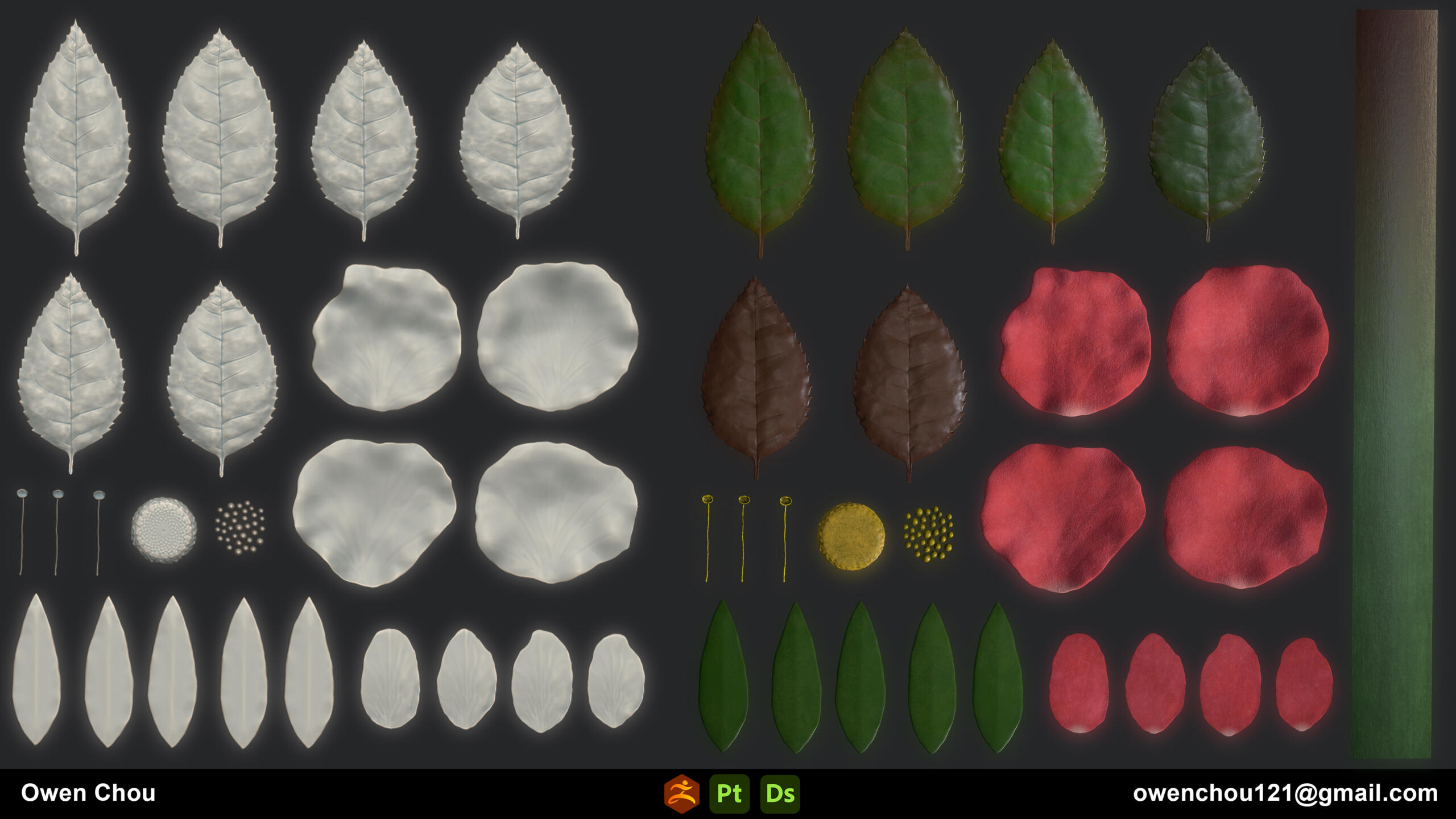
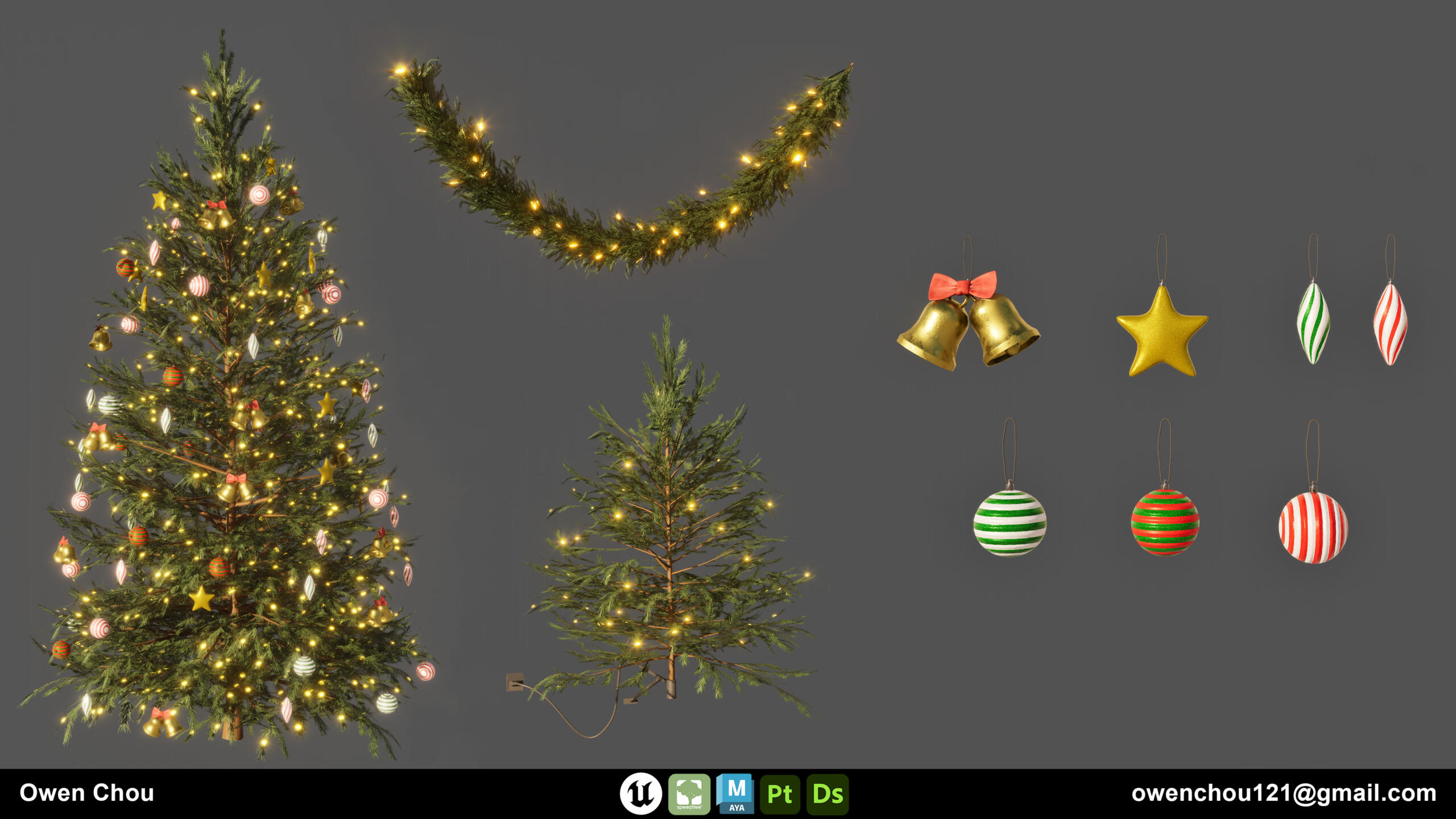
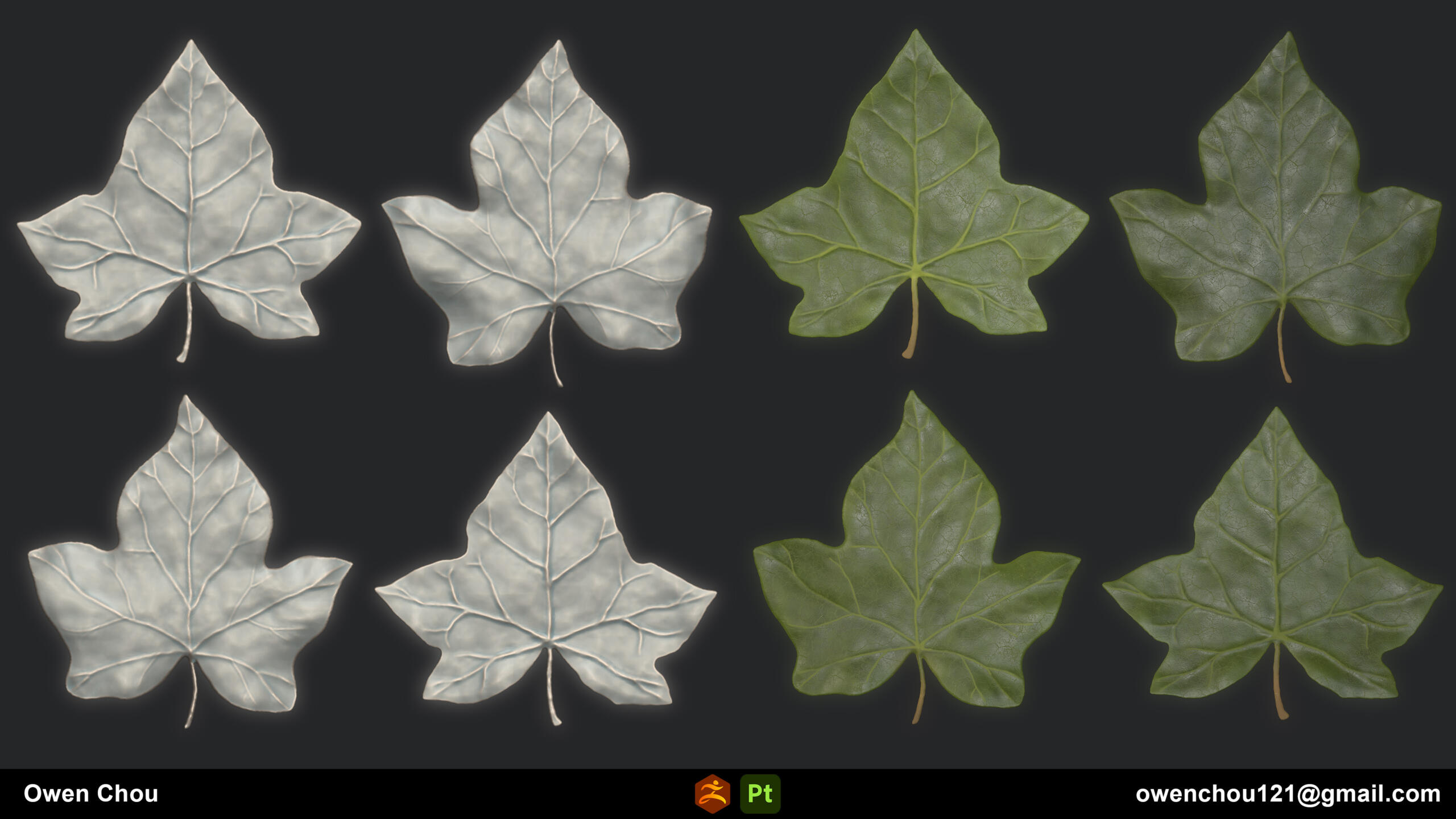
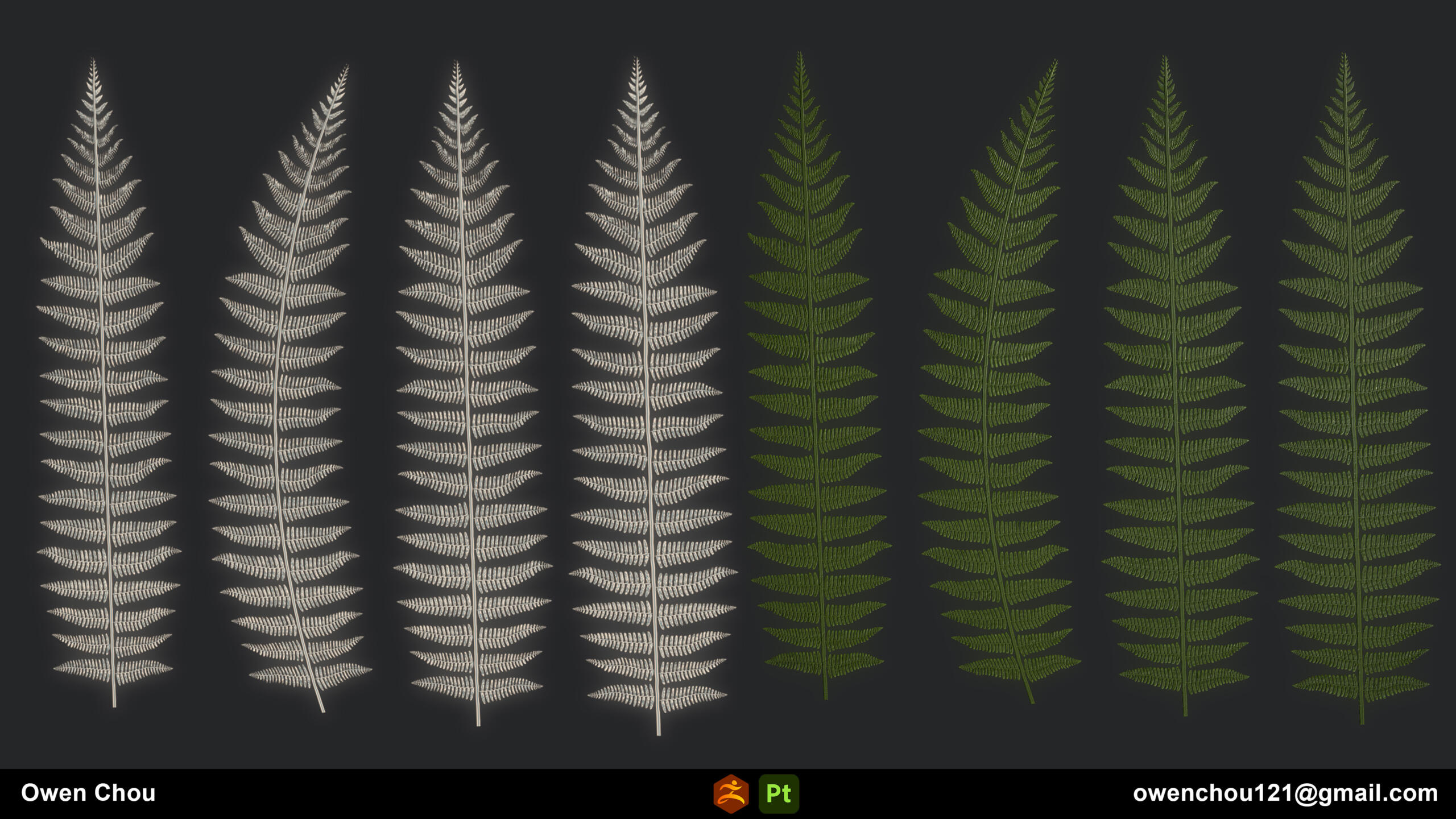
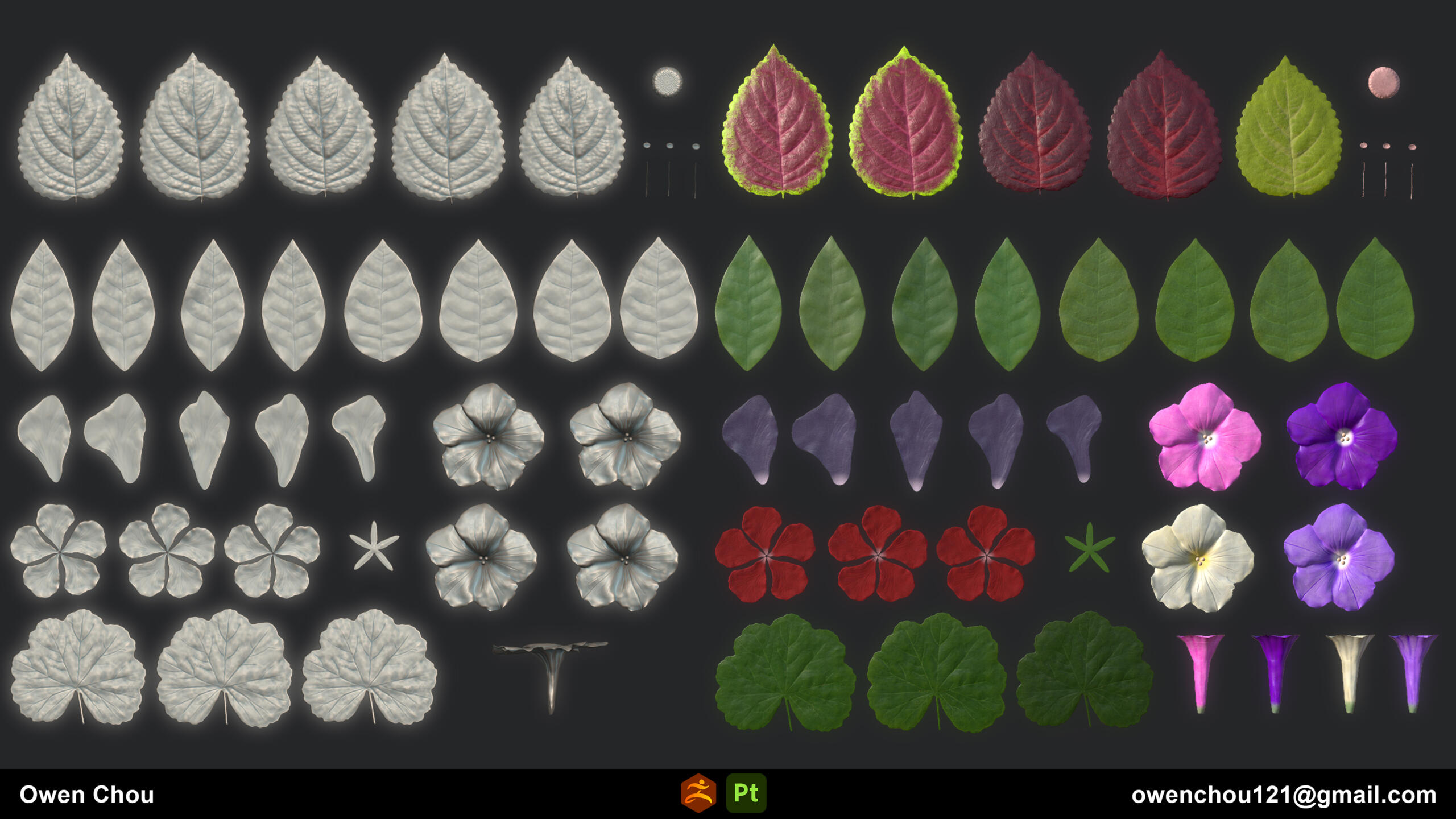
Although foliage is not the main focus of my environment, I wanted to use this project as an opportunity to improve my foliage skills, which played an important role in bringing the Christmas atmosphere to life, especially with the garlands and Christmas tree decorations. Foliage had always been one of the areas I struggled with the most, so I took this mentorship with Jared specifically to strengthen those skills and gain a better understanding of creating high-quality vegetation.
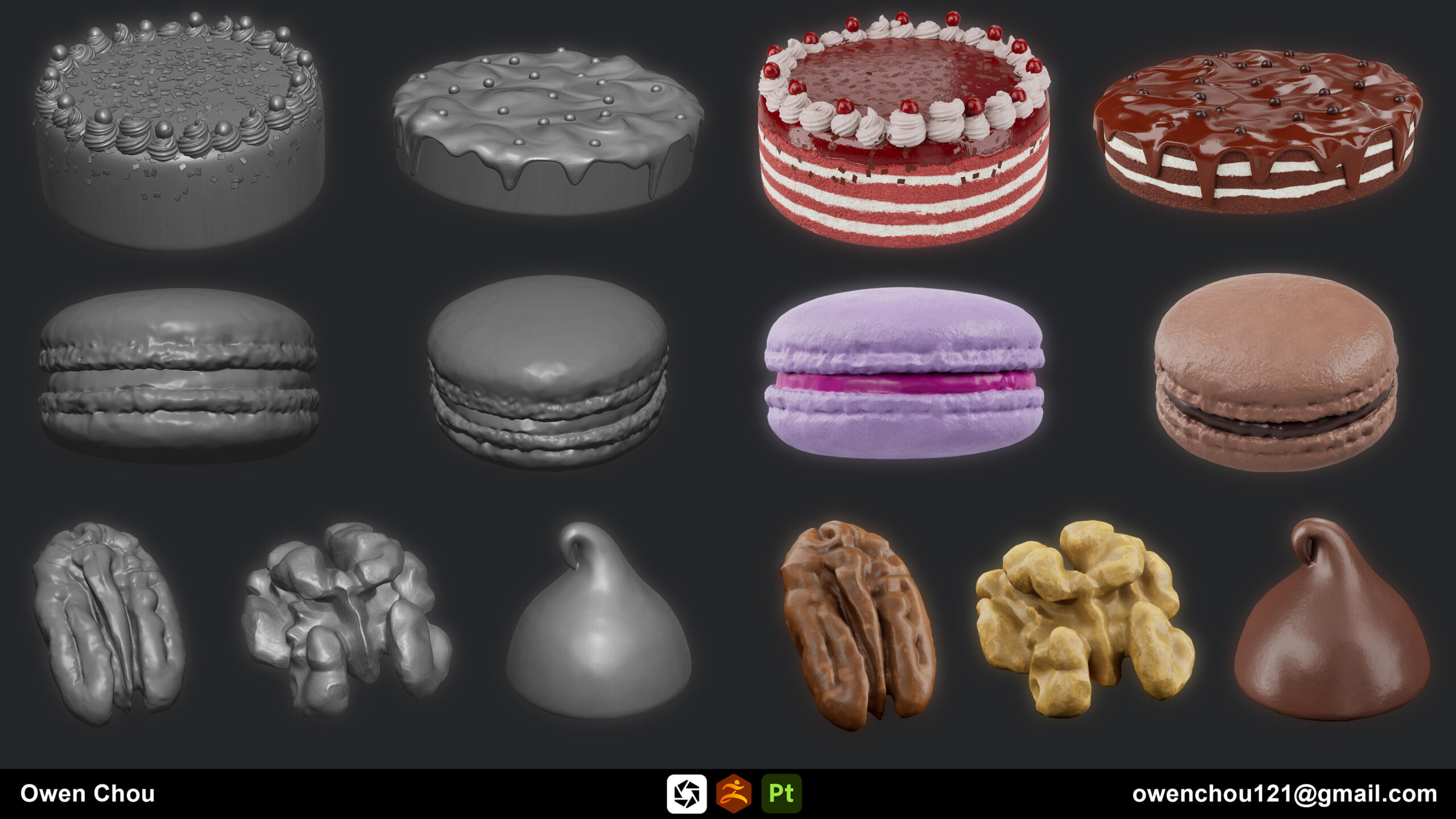
Food
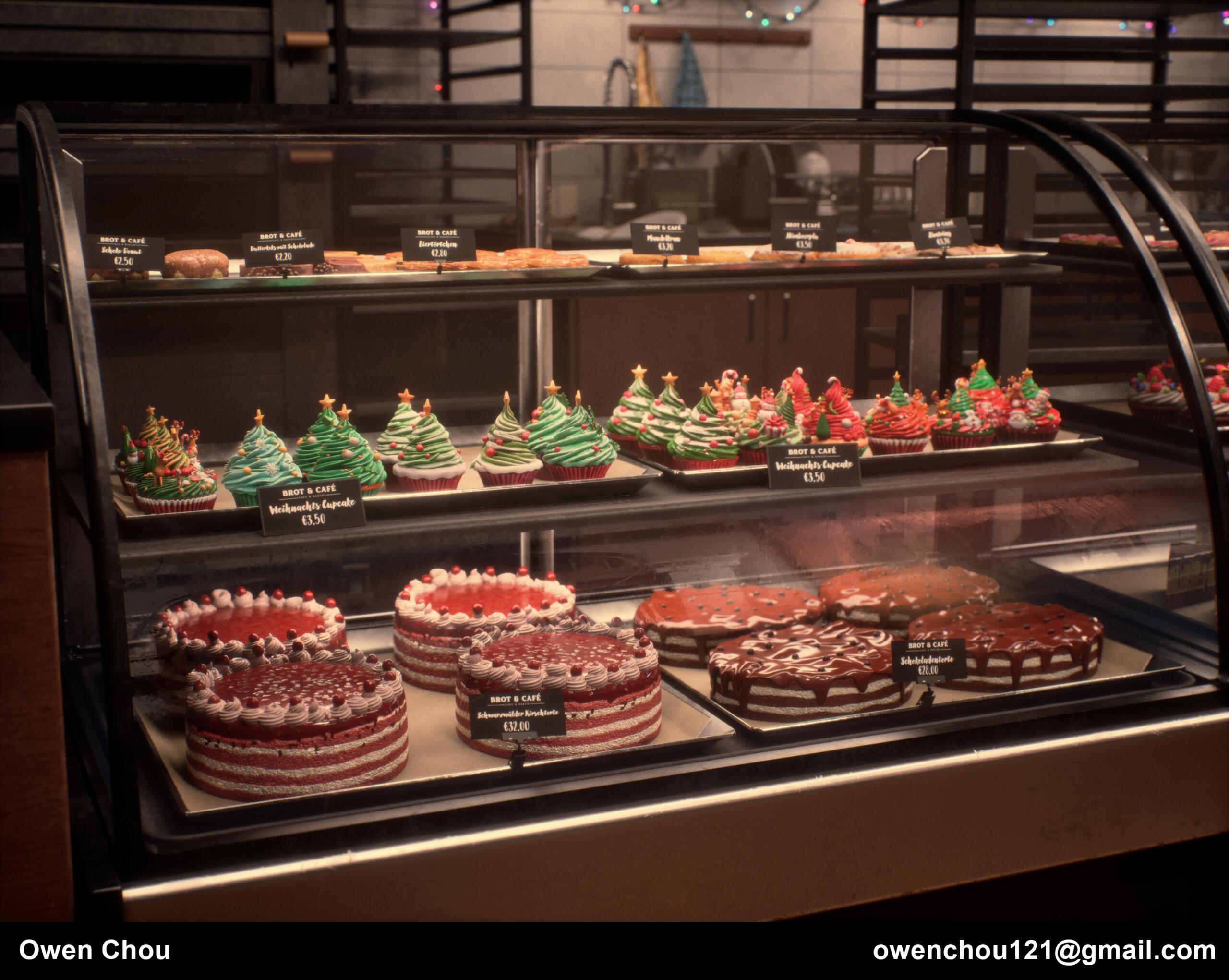
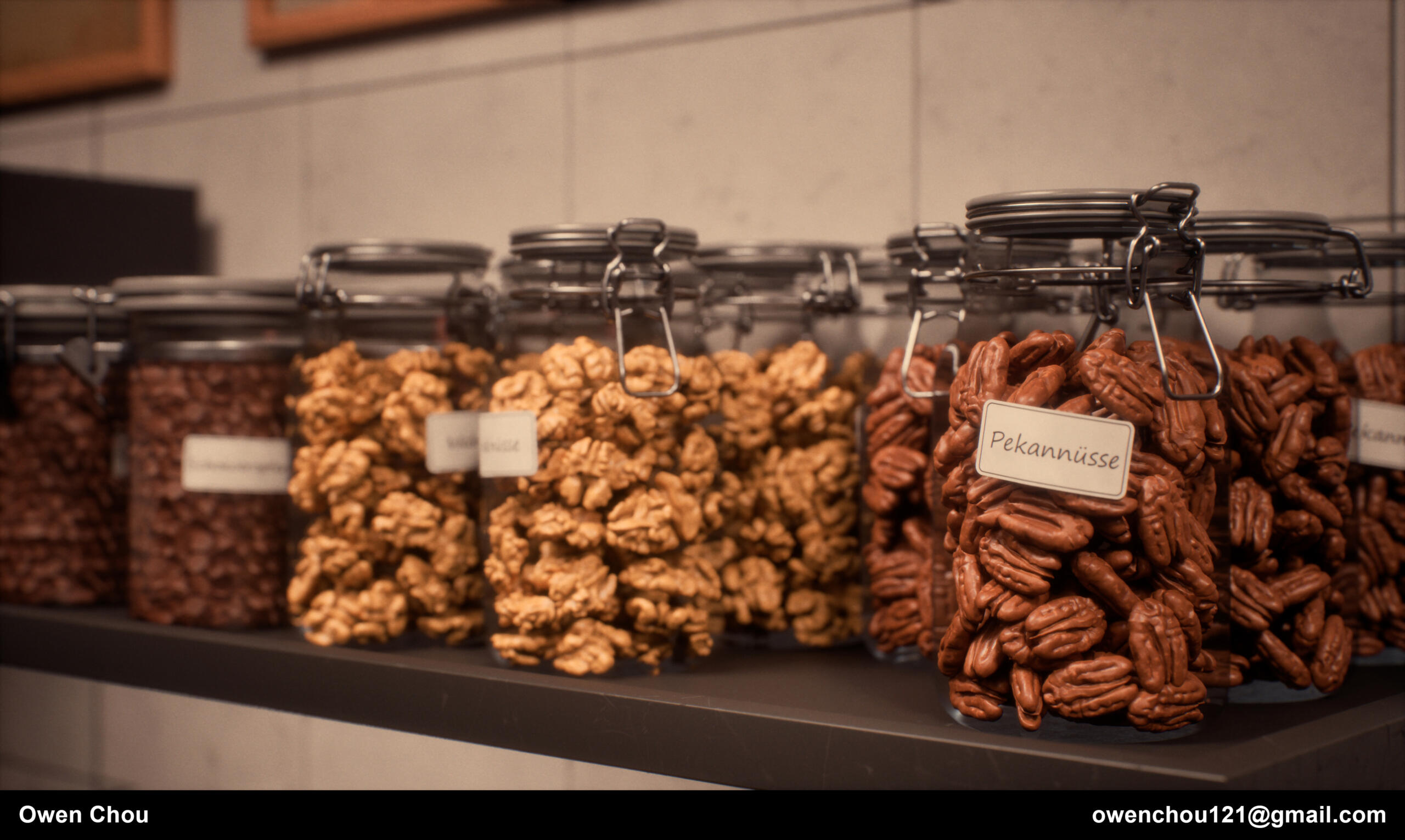
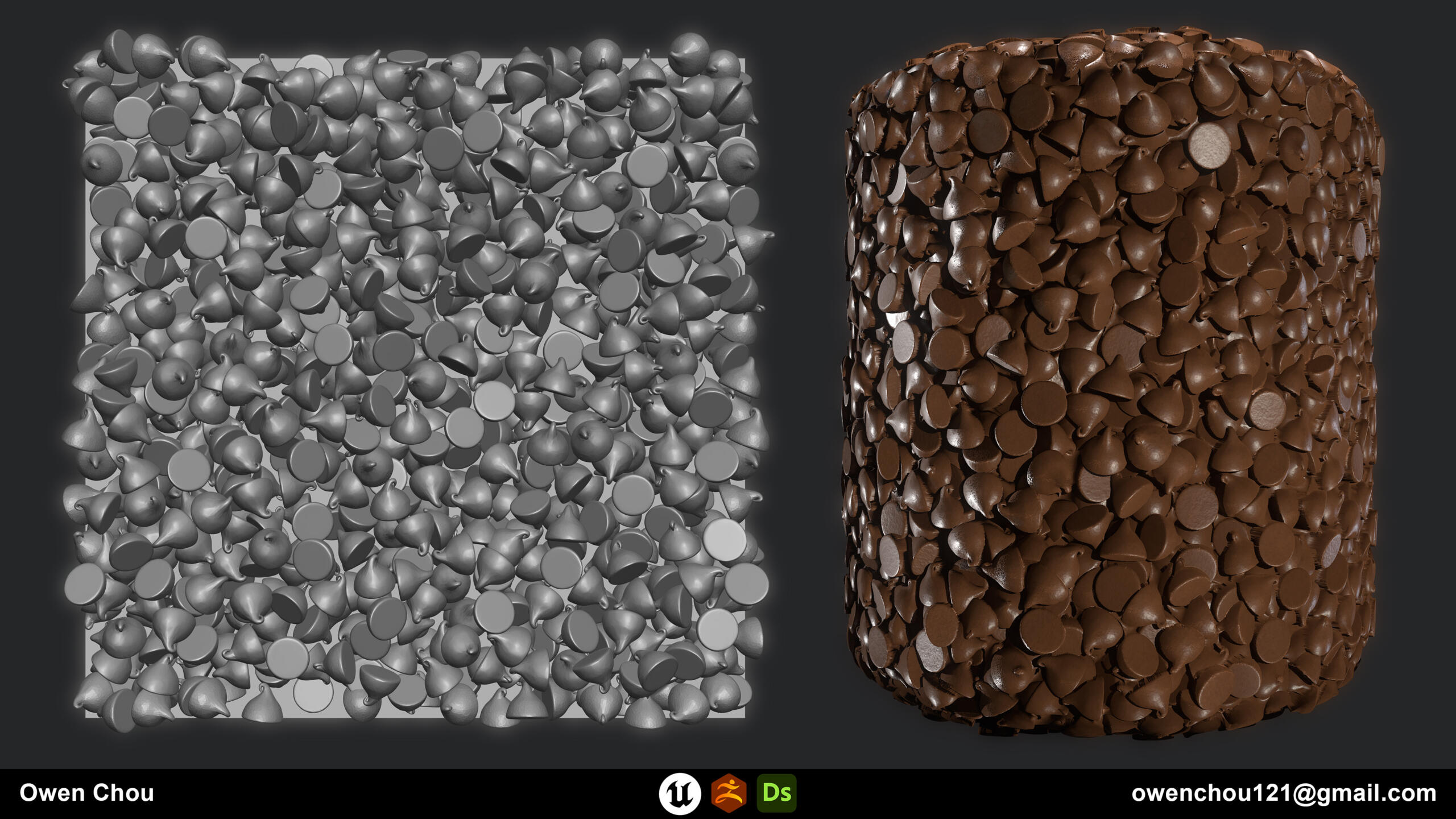
With all of the sculpting and texturing skills that I learned in my mentorship, I used them to create some of the food assets featured in my scene.
Color Grading
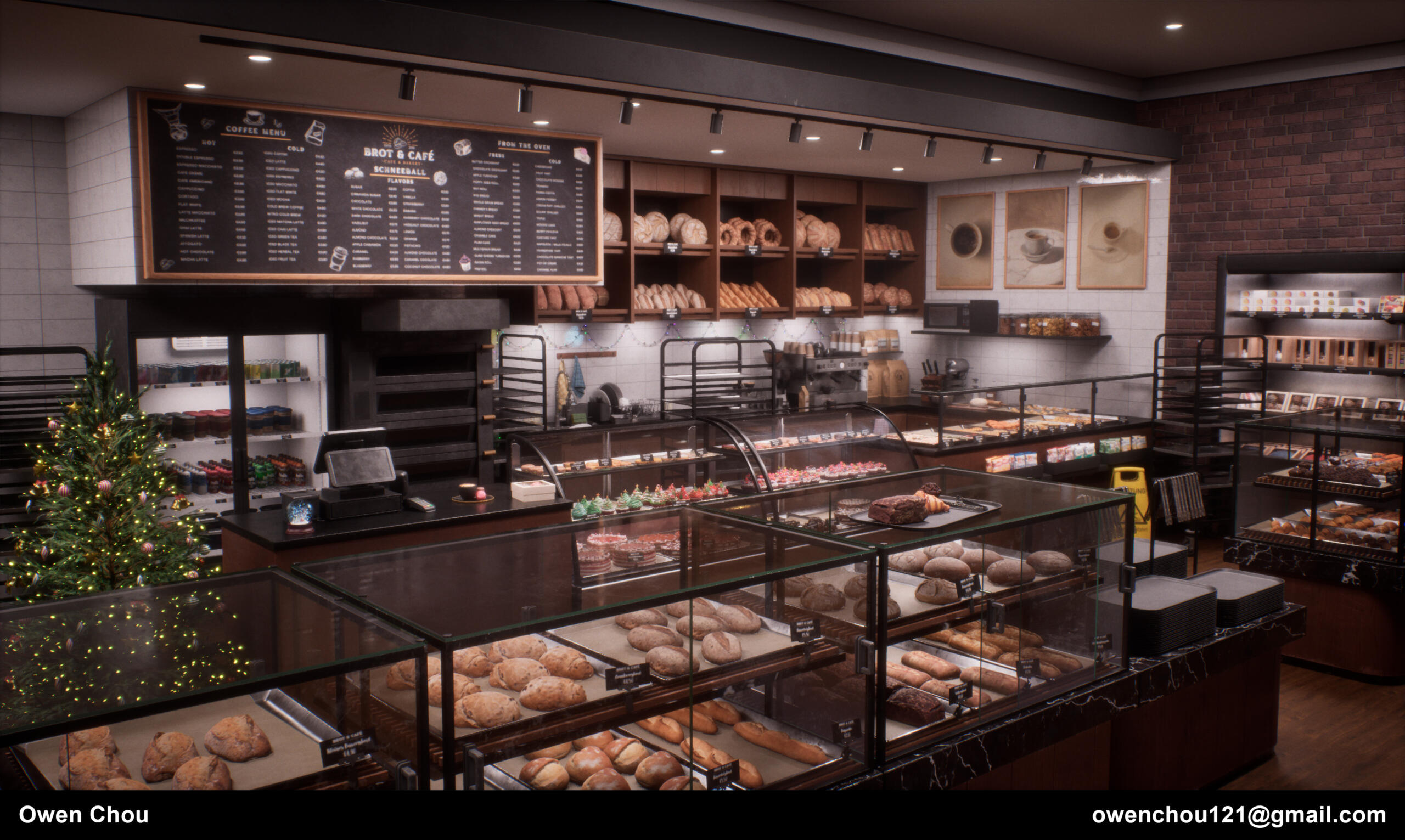
As the final touch for this environment, I applied a color grading LUT (Lookup table) created in DaVinci Resolve. While it’s important to establish most of your lighting and color values before any color grading, the LUT allowed me to subtly enhance specific colors and make final refinements to the overall look. The biggest advantage of using a LUT is that all of the color grading is applied directly in-engine, allowing the final look to be seen during gameplay rather than relying on color grading edits after rendering.
For the exterior shot, I warmed up the colors emitted by the artificial lights while shifting the natural lighting toward a cooler, bluer tone. This creates a strong contrast between the warm glow of the Christmas lights and the cold winter atmosphere, reinforcing the cozy holiday feel of the environment.
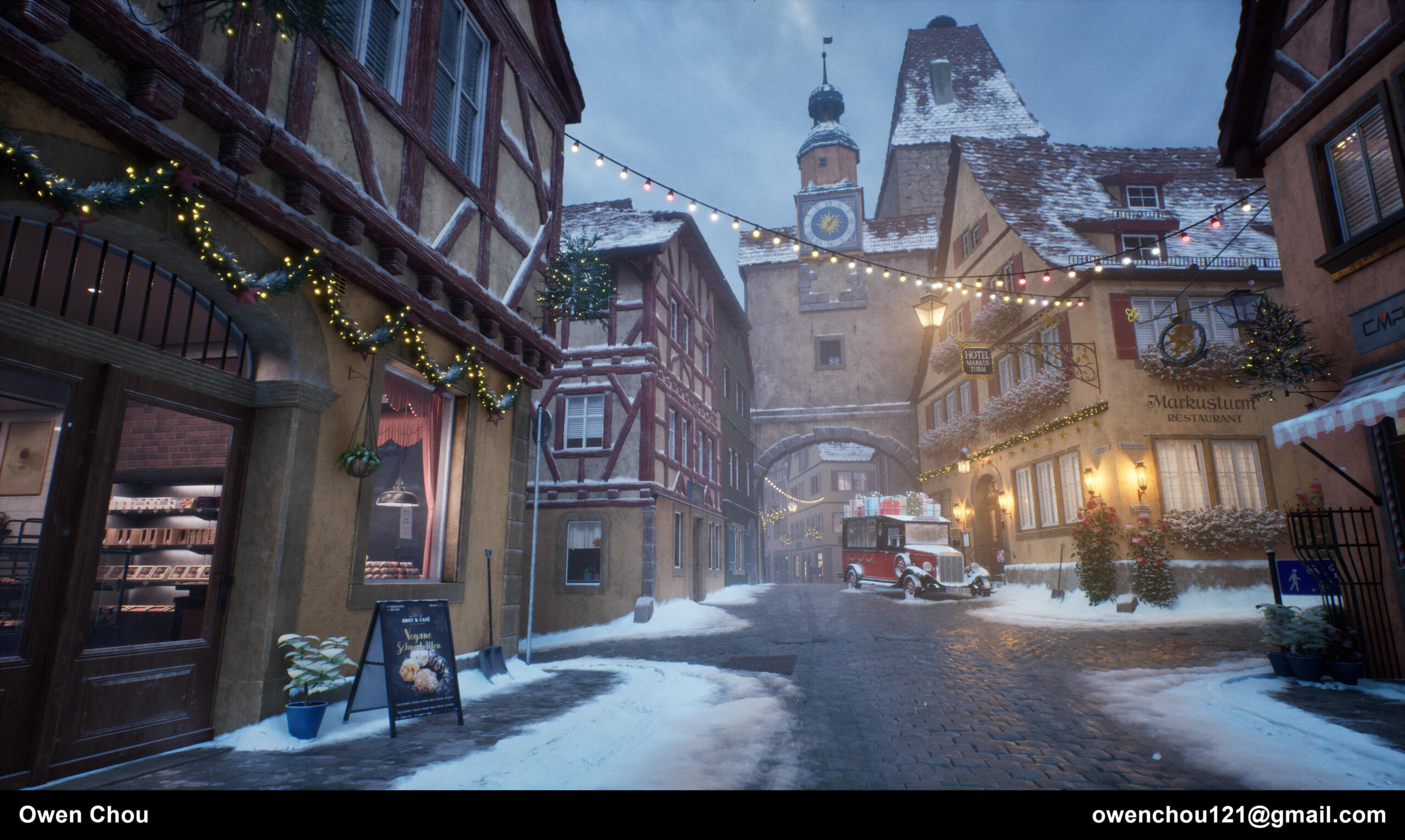
For the interior shots, I wanted to eliminate the cold lighting caused by the exterior HDRI and directional light, allowing the entire scene to feel much warmer. This is especially noticeable on the white kitchen wall tiles, which shift from a cool tone to a warm color. Once again, this reinforces the idea that the artificial lighting is what brings warmth to the environment, making the bakery feel cozy and welcoming. A place where customers would naturally want to step inside to escape the cold winter weather.
Contact & Follow Owen:
ArtStation: http://artstation.com/owenchou3d
LinkedIn: http://linkedin.com/in/owenchou11/
Instagram: instagram.com/owenchou3d
Thank you for reading from the Vessel Forge Team! Owen took our Foliage Art Mentorship with Jared Sobotta. Take a look at the program below: